


Canada accelerates uncrewed aerial system procurement for NATO and Arctic forces
Canada plans to acquire at least 120 uncrewed aerial systems through two competitions with combined funding ceilings of C$32 million.


T-Worx's smart rail system allows faster decision-making for men and women on the frontline. (Photo: NIAO)
Nioa is currently trialling a smart rail system, Intelligent-Rail (I-RAIL), that transforms rifles into real-time data nodes, linking soldiers on the battlefield with tactical leaders and commanders.
T-Worx developed the I-Rail under US Army funding and guidance, and it was selected by NATO as the basis for the NATO-powered Rail STANAG 4740/AEP-90.
The I-Rail provides the user with a fully integrated sensor platform with a single source of power and connectivity between weapon ancillaries including sensors.
It captures information from sensors on the weapon to create a data package that can include video, radio communication, ammunition usage and location logistics.
The system is already fully integrated within the Colt M4 family of weapons. Colt is a key partner of Nioa, which provides the Colt M4 as the primary weapon for Australian SOCOM units.
The I-Rail technology will be a key enabler for Land 159, Land 125-4, Land 53 and Land 200 programmes for the Australian Defence Force. Nioa is currently bidding for the next tranche of the Land 159 Lethality Systems programme.


Canada plans to acquire at least 120 uncrewed aerial systems through two competitions with combined funding ceilings of C$32 million.
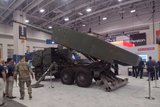
New counter-drone technologies, autonomous launchers and manufacturing modernisation initiatives highlighted emerging opportunities for defence suppliers, while the UK advanced a major military vehicle procurement programme.

Non-US companies are increasingly looking to establish subsidiary and partnerships to access the potential billions of dollars of vehicle and land systems contracts and there has already been some success.

Pearson Engineering has provided equipment and engineering expertise to the Armed Forces of Ukraine since the beginning of the full-scale Russian invasion in 2022. The British company is now working to deepen engagement with the Ukrainian defence industry, expanding its support for the country’s population and laying the foundations for future technological innovation.
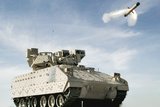
Rather than developing entirely new weapons, defence companies are looking to build on existing weapons and systems to deliver greater capability, control costs and accelerate fielding.

With a production rate of more than 10 million vehicles annually, the US commercial car and vehicle manufacturing base is second only to China. Defence companies are looking at how the vehicles, technology and manufacturing capability can support programmes.

Connect with us on socials


