Merkava-based AVLBs reach the Philippines
The Philippine Army is in receipt of two AVLBs based on a Merkava Mark IV tank chassis, following a contract with Elbit Systems. (Photo: Philippine Army)
Israel has delivered two bridge-laying vehicles to the Philippines, these based on an Israeli Merkava tank hull.


A pair of new armoured vehicle-launched bridges (AVLB) arrived by ship in Batangas in the Philippines on 12 July, after completing a sea journey from Israel.
It was earlier thought that these tracked AVLBs might use Leopard 2 hulls, but, in a remarkable move, Elbit Systems has used the Merkava Mk IV tank hull as the basis for these Philippine AVLBs.
This is the first known export of Merkava hulls, though Shephard is aware of persistent rumours that Singapore may have covertly procured some Merkava MBTs for its army.
Original specifications for this combat engineering equipment listed by the Philippines
Our news & analysis is now part of Defence Insight®
A Basic-level or higher Defence Insight subscription is now required to view this content.


More from Land Warfare
-
![AUSA 2026: BAE Systems pushes air defence capability with two new demonstrators]()
AUSA 2026: BAE Systems pushes air defence capability with two new demonstrators
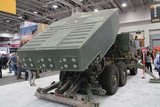
The company's new artillery demonstrator is intended to engage incoming missiles and ground targets, while a separate microwave system focuses on uncrewed aerial threats.
-
![AUSA 2026: Bale Defence adds CUAS role to RTV6 platform]()
AUSA 2026: Bale Defence adds CUAS role to RTV6 platform
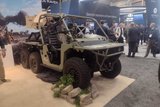
An elevated remote weapon station, radar sensor and 12.7mm machine gun provide the Australian vehicle with a potential mobile counter-drone capability.
-
![AUSA 2026: Northrop Grumman targets lower-cost air defence with $100 million Raid Hunter investment]()
AUSA 2026: Northrop Grumman targets lower-cost air defence with $100 million Raid Hunter investment
At AUSA 2026, Northrop Grumman revealed it had invested US$100 million in its Raid Hunter gun-based air defence capability, which the company claims could reduce the cost of individual engagements by 95.5% compared with interceptor missiles.
-
![Active protection systems: from optional upgrade to operational requirement]()
Active protection systems: from optional upgrade to operational requirement
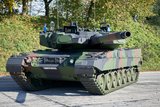
As battlefield threats multiply, active protection systems are becoming increasingly important for armoured vehicle survivability – but cost, integration challenges and evolving drone threats will determine how widely they can be deployed.