


Companies downselected for British Army vehicle programme
It is believed that three companies did not make the downselect but a dark horse in Spain’s Iturri is believed to have got through.


Logos Technologies has received funding to continue development of the SilentHawk military motorcycle under a DARPA Phase II Small Business Innovation Research (SBIR) award announced on 6 January.
Logos Technologies will continue to work on the motorcycle in partnership with Alta Motors, to develop a prototype that combines Alta’s existing RedShift MX electric motocross bike with Logos Technologies’ proven quiet, multi-fuelled hybrid-electric power system.
When fully matured, SilentHawk would allow small, distributed military teams to move long distances quickly and stealthily across harsh enemy terrain, meeting DARPA’s expectations for high performance, efficiency and military utility.
During Phase I of the programme, Logos and Alta conducted performance testing on the RedShift MX in multiple terrains and riding conditions to help understand the requirements for an off-road military motorcycle. Using this data, Logos demonstrated the suitability of its hybrid-electric system to meeting actual off-road power requirements.
The result of Phase I was a preliminary design, backed by testing and modelling, which Logos intends to turn into a prototype during Phase II. The current timeline aims to see an operational prototype developed and tested within 18 months.
Wade Pulliam, manager of advanced concepts, Logos Technologies, said: ‘Quiet, all-wheel drive capability at extended range in a lightweight, rugged, single-track vehicle would support the successful operations in extreme terrain conditions and contested environments. This award enables us to continue to execute a fast-paced development effort that takes advantage of our team’s prior work, superior technical approach, and extensive experience.
‘An innovative design approach, including a unique field-swappable power system concept, will allow unprecedented customisability of the bike while still meeting and exceeding the government’s challenging requirements. We also believe that the system resulting from this second phase of the programme would have applicability to other ground vehicle systems beyond motorcycles.’


It is believed that three companies did not make the downselect but a dark horse in Spain’s Iturri is believed to have got through.
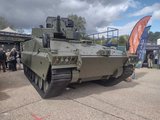
Air defence and counter-drone weapons continue to be developed, tested and demonstrated in anticipation of growing demand, with most solutions designed to be platform-agnostic and readily integrated onto suitable platforms.
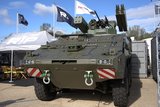
The US Army began its search for a 155mm tracked mobile tactical cannon in an effort that Shephard forecasts could be worth billions of dollars. Meanwhile, the UK DVD exhibition saw companies showcase their offerings for the British Army’s mobility and air defence requirements.

The development demonstrates how the platform could provide additional firepower and growth potential while the US Army progresses its long-term replacement for the Bradley.
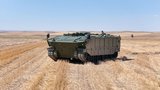
FNSS and PT Pindad are progressing the Indonesian tracked armoured personnel carrier programme as local production gets under way.

Firing trials of the Tulpar and Leonardo Hitfact Mk II combination follow an integration programme covering mechanical, electrical, electronic and software interfaces.

Connect with us on socials


