US Army seeks industry support to prepare acquisitions of Group 4+ UAVs
The US Army is keen to hear about vendor designs, strategies and potential hardware and software solutions to inform requirements for procurement efforts.
Lockheed Martin has announced that it has been awarded a contract to continue providing the US Army with the production, assembly, training and deployment of virtual local area network training units. The contract, announced in a 27 March 2012 statement, is worth $22 million.
The Digital Deployed Training Classroom (DDTC) provides the capability for deployed soldiers to participate in group or individual instruction through virtual learning experiences.
Over the course of the original contract, Lockheed Martin developed, configured, tested, and deployed the first DDTC in late 2010. Since then, the company has put into theatre 26 DDTC units currently being used by army Brigades in Afghanistan, Kuwait, and Germany.
The DDTC provides the capability for deployed soldiers to participate in group or individual instruction through Video Teletraining (VTT), Interactive Multimedia Instruction (IMI), Web-based training, unit collaboration, and professional development training through access to current distributed learning programmes and constructive simulations. The DDTC will support 20 students simultaneously with notebook workstations, two-way VTT, and shared printing and scanning/fax capabilities. The DDTC will operate in either unclassified secure or SECRET modes.
The US Army is keen to hear about vendor designs, strategies and potential hardware and software solutions to inform requirements for procurement efforts.
Top attacks have proven effective against heavily armoured vehicles in Ukraine. A new family of uncrewed aerial system-delivered munitions is looking to press that advantage further.
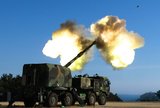
The Israeli company hopes that producing its Sigma artillery system wholly in the US will help it win a key US Army contract, but it will be up against the popular CAESAR Mk II wheeled weapon and the K9 tracked.
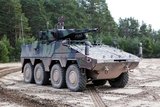
Germany has ordered 84 RCH 155 self-propelled guns, as system incorporating Boxer 8×8 vehicles and the Artillery Gun Module, and 200 Puma Infantry Fighting Vehicles while the UK has committed to a single Early Capability Demonstrator RCH 155.
While integration of guided weapons on modern armoured vehicles usually takes the form of a podded launcher on the turret exterior, recent developments suggest the concept of firing missiles from a tank’s main gun could be seeing a revival.
The order is a further boost for the Common Armoured Vehicles System programme which has notched notable successes in the past 12 months. The first vehicle, made in Finland, will be delivered next year with local production expected to ramp up in 2027.