


FNSS advances Indonesian Kaplan APC programme as local production expands
FNSS and PT Pindad are progressing the Indonesian tracked armoured personnel carrier programme as local production gets under way.


Lockheed Martin will design an advanced simulation-based training system for the US Army to ensure that army, joint and coalition leaders are prepared to act decisively in the evolving operational environment, the company announced.
The IDIQ contract, with a ceiling value of $146 million over five years, will see the US Army supplied with the Joint Land Component Constructive Training Capability (JLCCTC) system.
The JLCCTC system will support training exercises that replicate complex operational scenarios, preparing commanders and their staff to direct military operations. Seven current command and battle staff training tools will be integrated into a single system for the JLCCTC.
The system will simulate enemy and friendly forces, presented to allow commanders and their staff to practice making decisions during high pressure military missions. The system also supports the army’s strategy for an integrated training environment that combines live, virtual and computer-generated training elements.
Jim Weitzel, vice president of training solutions for Lockheed Martin’s Mission Systems and Training business, said: ‘Integrating seven training components provides sustainment cost savings and makes it easier and faster to generate training scenarios. JLCCTC will be built with a modelling and simulation-based architecture to present data driven scenarios for relevant, adaptable training.’
In addition to integration, Lockheed Martin developed the Warfighter’s Simulation (WARSIM) component of JLCCTC. In 2012, WARSIM supported 14 training exercises and trained more than 22,000 commanders, their staffs and units.

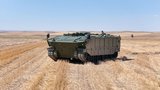
FNSS and PT Pindad are progressing the Indonesian tracked armoured personnel carrier programme as local production gets under way.
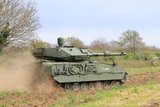
Firing trials of the Tulpar and Leonardo Hitfact Mk II combination follow an integration programme covering mechanical, electrical, electronic and software interfaces.
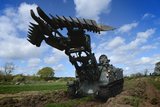
The news from Ukraine has again shown that antitank minefields and other obstacles on the battlefield, such as deep trenches, can play a key role in both offensive and defensive operations. Given this, there will always be a need to clear them, both during and after a conflict.
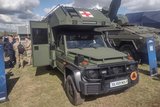
The UK Ministry of Defence has avoided being prescriptive in its search to replace the British Army’s Land Rover, meaning vehicle types being offered range from Land Rover Defender Wolf II and Humvee to the hybrid series Fering Pioneer. What does this mean for the procurement process?

The introduction of Ajax vehicles into British Army service was stopped after operator health issues were reported during an exercise, but manufacturer General Dynamics Land Systems UK believes work over the past 10 months has dealt with the problems.

Sweden, Croatia and France are pursuing different rocket artillery solutions as European armies seek greater reach, survivability and industrial resilience.

Connect with us on socials


