Lockheed Martin announces PAC-3 Missile support contract


Lockheed Martin will provide maintenance and surveillance services to US and international customers of the Patriot Advanced Capability-3 (PAC-3) under a new $212 million contract from the US Army Aviation and Missile Command.
PAC-3 is currently in the inventory of six nations - the US, the Netherlands, Germany, Japan, the United Arab Emirates and Taiwan. Lockheed Martin is also under contract to provide assets to a seventh nation, Kuwait.
Lockheed Martin is the prime contractor on the PAC-3 Missile Segment of the Patriot air defence system. Maintenance and surveillance work under this contract will begin immediately from Lockheed Martin facilities in the US.
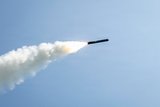
The PAC-3 Missile is an advanced, capable and reliable theatre air defence missile. It is designed to defend against advanced tactical ballistic and cruise missiles, and fixed- and rotary-wing aircraft. PAC-3 significantly increases the Patriot system's firepower, as 16 PAC-3s can be loaded in place of only four legacy Patriot PAC-2 missiles on the Patriot launcher.


More from Land Warfare
-
![Why Middle Eastern markets demand bespoke AFV solutions]()
Why Middle Eastern markets demand bespoke AFV solutions
In this expert analysis, Christopher Foss looks at how armoured vehicle suppliers to the Middle East are increasingly tailoring platforms for the region’s specific operational requirements.
-
![Milrem outlines plans for Havoc and Vector as Ukrainian THeMIS numbers set to double]()
Milrem outlines plans for Havoc and Vector as Ukrainian THeMIS numbers set to double
Milrem’s THeMIS uncrewed ground vehicle is one of the most battle-proven medium UGV platforms in service, with the company looking to have production versions of new large platforms ready before the end of the decade.
-
![Localisation is the aim of the game in defence procurement]()
Localisation is the aim of the game in defence procurement
Defence buyers globally are increasingly looking to tie domestic manufacturing and technology transfer into deals.
-
![February land forces roundup: ST Engineering and Russia lift the lid on new platforms]()
February land forces roundup: ST Engineering and Russia lift the lid on new platforms
This month we saw a major presence from Turkish, Russian and Chinese companies at the World Defense Show with new vehicles from major suppliers, while elsewhere there were evolving mortar programmes and artillery modernisation efforts.