Lithuania receives first two Vilkas IFVs


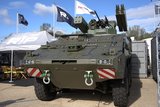
The Lithuanian armed forces have received two Vilkas infantry fighting vehicles (IFVs), the Lithuanian Ministry of National Defence announced on 15 December.
The unarmed vehicles are configured for training, with equipment to assist instructors in training future operators.
Vilkas is the Lithuanian name for the Boxer IFV, 88 of which are on order for the Ministry of National Defence under a contract signed with vehicle manufacturer Artec in August 2016.
Three additional Vilkas IFVs will be supplied for training purposes under a separate logistics package. This package will also cover repair services, technical logistical support from the manufacturer, technical and methodological documentation, means for simulation and training, special equipment, maintenance and ammunition.
The delivery of the first Vilkas IFV is expected in early 2019, with the remainder to follow by 2021.
Related Equipment in Defence Insight

More from Land Warfare
-
![Tulpar firing trials expand Hitfact Mk II platform options]()
Tulpar firing trials expand Hitfact Mk II platform options
Firing trials of the Tulpar and Leonardo Hitfact Mk II combination follow an integration programme covering mechanical, electrical, electronic and software interfaces.
-
![How to breach a minefield: from traditional systems to modern techniques in action]()
How to breach a minefield: from traditional systems to modern techniques in action
The news from Ukraine has again shown that antitank minefields and other obstacles on the battlefield, such as deep trenches, can play a key role in both offensive and defensive operations. Given this, there will always be a need to clear them, both during and after a conflict.
-
![British Army's open plan draws diverse offerings for Land Rover replacement]()
British Army's open plan draws diverse offerings for Land Rover replacement
The UK Ministry of Defence has avoided being prescriptive in its search to replace the British Army’s Land Rover, meaning vehicle types being offered range from Land Rover Defender Wolf II and Humvee to the hybrid series Fering Pioneer. What does this mean for the procurement process?