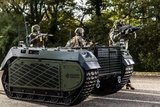
What does the proliferation of larger platforms mean for the UGV market?
A surge in heavier, combat-focused uncrewed ground vehicles is emerging, although operational demand remains uncertain.
Leonardo DRS has received a $67 million contract to provide vehicle-based infrared sensors for surveillance and fire control systems on a variety of US Army ground combat vehicles, the company announced on 27 March.
The contract, awarded by the US Army Contracting Command, Aberdeen Proving Ground, will see the company provide Horizontal Technology Integration Second Generation-Forward Looking Infrared (SG-FLIR) Block 1 A/B-kits, an infrared sensor that supports fire control and surveillance on a range of the army’s ground combat vehicles.
The SGF-FLIR programme provides soldiers with night vision capabilities for Abrams tanks, Bradley Fighting Vehicles and Stryker vehicles.
Work will be completed in early 2026.
A surge in heavier, combat-focused uncrewed ground vehicles is emerging, although operational demand remains uncertain.
The new 6x6 wheeled fire support vehicle is armed with a 105mm NATO-standard high-pressure rifled gun, positioning it for the French Army and wider potential allied requirements.
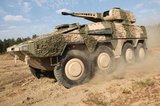
Even with additional armour, many current-generation infantry fighting vehicles are highly vulnerable to enemy fire in the contemporary operating environment. Are heavier platforms based on tank designs for use in this role the answer?
The European Land Robot Trials are influenced by NATO researchers seeking to create uncrewed ground vehicle standards for allied Western forces working in multinational task forces.
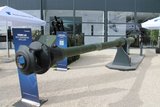
New iterations of a 57mm gun system highlight a push towards multi-role turrets capable of countering armour, drones and aerial targets.
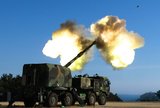
The agreement points to growing international interest in mobile and survivable artillery systems, with further orders and export opportunities already emerging.