Javelin tested using RWS on JLTV


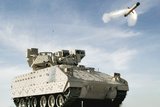
Oshkosh Defense and industry partners have participated in a flight test at the Redstone Test Center in Redstone Arsenal, Alabama, during which a Javelin anti-tank guided missile was tested using a Kongsberg remote weapon station mounted on a Joint Light Tactical Vehicle (JLTV).
This demonstration represented a first-time firing of both the Javelin and the Northrop Grumman lightweight 30mm cannon through a remotely operated weapon station on the Oshkosh JLTV.
‘This successful demonstration further solidifies the importance of the JLTV‘s position within the current combat fleet formation,’ George Mansfield, vice president and general manager of joint programs at Oshkosh Defense, said.
‘The JLTV is the only light tactical vehicle on the field today that can manoeuvre within combat formations, hauling critical weaponry and equipment quickly across complex terrain, all while keeping our troops safe and protected.’
US military representatives plus guests from multiple other nations attended and observed the event.
Javelin is an anti-tank, guided munition and surveillance weapon system made by the Javelin Joint Venture, a partnership between Raytheon and Lockheed Martin.
Related Equipment in Defence Insight

More from Land Warfare
-
![AUSA 2026: industry looks to make commercial platforms a military reality]()
AUSA 2026: industry looks to make commercial platforms a military reality
With a production rate of more than 10 million vehicles annually, the US commercial car and vehicle manufacturing base is second only to China. Defence companies are looking at how the vehicles, technology and manufacturing capability can support programmes.
-
![With changing patterns in Middle Eastern procurement, is Europe missing out?]()
With changing patterns in Middle Eastern procurement, is Europe missing out?
Traditional suppliers are struggling to meet the Middle East’s armoured vehicle modernisation needs, creating opportunities for South Korean manufacturers and regional defence industries.
-
![AUSA 2026: CUAS market expands as suppliers target new threats and operational requirements]()
AUSA 2026: CUAS market expands as suppliers target new threats and operational requirements
New developments from MARSS, MyDefence, Mountain Horse Solutions and Rafael suggest that future counter-drone protection will increasingly depend on combining advanced detection, rapid interception and integrated defensive networks.