Javelin firings showcase CROWS flexibility
Robotic Combat Vehicle-Light. (Photo: US Army National Guard/Bruce Huffman)
Kongsberg and the Javelin JV conducted a four-shot, multi-platform Javelin demonstration in May for the US Army.


Kongsberg Defence and Aerospace announced on 24 June that it recently demonstrated the flexibility of the Common Remotely Operated Weapon Station (CROWS) Tech Refresh system and its ability to navigate and meet new US Army lethality requirements.
Working with the US Army, Kongsberg and the Javelin JV conducted a four-shot, multi-platform Javelin demonstration at Redstone Test Center in Alabama on 25 May.
Two different vehicles were each equipped with different configurations of the Kongsberg CROWS-Javelin (CROWS-J). The vehicles were: Robotic Combat Vehicle-Light (RCV-L) from QinetiQ North America and the 4x4 Joint Light Tactical Vehicle from Oshkosh Defense.
Kongsberg stated that it ‘executed a fully remote firing of Javelin using CROWS Tech Refresh control components. This was a first for the Army’s official RCV-L platform and demonstrated Tech Refresh’s backwards compatibility with legacy CROWS systems’.
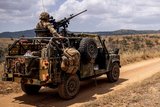
Additionally, Javelin was fired from a lightweight Ground Mobility Vehicle equipped with the Kongsberg Protector RS6 RWS.
‘Our remote weapon stations are powerful force multipliers, especially given that we’re delivering a Multi-User Multi-Station (MUMS) capability to facilitate advanced target sharing and cooperative engagement,’ claimed Jason Toepfer, US land business development director at Kongsberg Defence and Aerospace.
Related Programmes in Defence Insight
JLTV (US Army) (Batch 1) [USA]
Related Equipment in Defence Insight


More from Land Warfare
-
![British Army Land Rover replacement plan inches forward]()
British Army Land Rover replacement plan inches forward
The UK Ministry of Defence has proposed a selection date of May 2027 for the Land Rover replacement requirement, with deliveries expected through to 2036. Next month’s DVD exhibition will be a key shop window for bidders.
-
![Snow patrol and access all areas: the Arctic all-terrain vehicles market grows]()
Snow patrol and access all areas: the Arctic all-terrain vehicles market grows
The procurement and planned procurement of articulated tracked all-terrain vehicles is being driven by a need to replace older platforms and an acknowledgement of a capability gap for Arctic regions.
-
![Push strengthens for a second JLTV supplier]()
Push strengthens for a second JLTV supplier
A move, launched in May, could lead to a second supplier for the US Marines Corps’ Joint Light Tactical Vehicle requirement. Meanwhile, Wisconsin elected representatives have been pushing for necessary funding to be included in the FY27 budget.
-
![Canada reveals first requirements for future long-range air-to-air missile]()
Canada reveals first requirements for future long-range air-to-air missile
Exclusive: Ottawa says its future NORAD interceptor must be highly stealthy, resistant to jamming and capable of engaging threats at very long range, while leaving the competition open to domestic and international suppliers.