Japan-US jointly research next-gen amphibious vehicle


The Acquisition, Technology and Logistics Agency announced on 13 May that the Japanese MoD and US DoD had signed an agreement to jointly research next-generation amphibious technology.
In this project, Japan and the US will examine the feasibility of amphibious technology using a simulator based on a digital model of an amphibious vehicle.
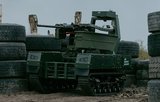
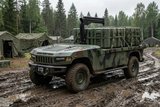
Japan has been developing a domestic amphibious vehicle since 2016, and it is thought the Mitsubishi Amphibious Vehicle (MAV) will provide the base technology for this development.
Mitsubishi Heavy Industries developed the MAV with its own budget. Mitsubishi has also been developing its 12MB engine that generates
Our news & analysis is now part of Defence Insight®
A Basic-level or higher Defence Insight subscription is now required to view this content.

You may also like

More from Land Warfare
-
![Clearer military requirements could unlock UGV market growth]()
Clearer military requirements could unlock UGV market growth
Western armies continue to test uncrewed ground vehicles, but wider procurement will depend on turning ambitions for autonomy into defined operational roles and funded requirements.
-
![Can NATO’s CUAS marketplace turn urgent demand into deliveries?]()
Can NATO’s CUAS marketplace turn urgent demand into deliveries?
Framework contracts and leasing options aim to shorten acquisition timelines, while manufacturing partnerships could help suppliers scale production to meet allied demand.
-
![A medium UGV market emerges as the US weighs up its options]()
A medium UGV market emerges as the US weighs up its options
The US is pursuing multiple UGV programmes, from commercial robotic platforms to new autonomy technologies. The combination of these efforts could prove key to turning ambition into operational capability.
-
![NATO looks for answers to overcome standards hurdles and improve procurement]()
NATO looks for answers to overcome standards hurdles and improve procurement
NATO is looking to artificial intelligence to provide integration between different C2 systems to create a common operational picture, potentially offering a faster route to interoperability than the slow-moving processes of NATO standards committees.
-
![NATO FUSE exercise plays out real-world scenario in the face of eastern border risks]()
NATO FUSE exercise plays out real-world scenario in the face of eastern border risks
The large-scale exercise in Latvia was the culmination of three experimentation initiatives to see how platforms, weapons and systems could fit into the alliance’s Eastern Flank Deterrence Initiative. As well as forces, it brought together companies and equipment.
-
![Canada accelerates uncrewed aerial system procurement for NATO and Arctic forces]()
Canada accelerates uncrewed aerial system procurement for NATO and Arctic forces
Canada plans to acquire at least 120 uncrewed aerial systems through two competitions with combined funding ceilings of C$32 million.