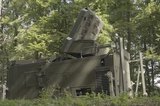
Japan to reform ground forces


Japan’s Defence White Paper published yesterday has outlined some wide ranging changes to the Japan Self-Defence Force.
Although the main focus is on securing the air-sea environment there are also reforms to the Ground Self-Defence Force (GSDF) that will allow the organisation to improve its ability to rapidly respond to security crises.
Japan’s National Defense Programe Guidelines (NGDP) published in December 2013 highlighted an ‘increasingly severe’ security situation and desire to improve its joint operations.
Following these principles, the GSDF’s Central Readiness Force is being replaced by three rapid deployment divisions and four rapid deployment brigades. The single armoured division
Our news & analysis is now part of Defence Insight®
A Basic-level or higher Defence Insight subscription is now required to view this content.




More from Land Warfare
-
![Europe’s eastern flank moves on air defence radars with wider efforts also underway]()
Europe’s eastern flank moves on air defence radars with wider efforts also underway
Air defence radars have become more important assets in the past year with incursions in NATO countries on Europe’s eastern flank highlighting the need.
-
![Australia’s SM-2 land trial could reshape ADF medium-range air defence plans]()
Australia’s SM-2 land trial could reshape ADF medium-range air defence plans
The first ground launch of the SM-2 could offer Canberra a path to expand its missile defence capability by adapting systems already fielded across the ADF.
-
![UK hits pause on deployable mortar system procurement as US begins search]()
UK hits pause on deployable mortar system procurement as US begins search
The US Army's market survey into available 81mm and 120mm mobile mortar systems was launched only a few days after the UK suspended Project Stokes, an almost identical plan, “pending future decisions on prioritisation, resourcing and funding”.
-
![New teams form to compete for British Army Land Rover replacement]()
New teams form to compete for British Army Land Rover replacement
The UK’s Land Mobility Programme Light Mobility Vehicle requirement is designed to replace the British Army’s ageing fleet of Land Rovers with a vehicle with a Gross Vehicular Mass of less than 3,500kg. It could be for as many as 6,000 vehicles.