Indra to develop IED analysis labs
Indra has been awarded a framework contract by the European Defence Agency (EDA) to develop new forensic analysis laboratories for Counter-Improvised Explosive Devices (C-IED), the company announced on 10 August.
The supply and design of the first laboratory is anticipated to cost $2.4 million. The project would have an option to buy a second laboratory, which would increase the cost of the project to $4.39 million.
The aim of these labs will be to gather information on procedures, tactics and techniques that are used in terrorist attacks.
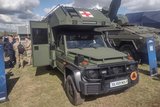
The labs will have 13 modular containers that can have different configurations as per the requirements of the mission. They will be prepared to collect on-site samples from chemical, biological, radiological, nuclear, and explosives (CBRNe) attacks, and perform chemical and biometric forensic analyses of the samples, including traces of the electronic devices used for IED activation and control.
The lab will feature an advanced data management system and have the capability to analyse computer data, enabling the comparison of an attack with past incidents and providing support for planning tasks, generating reports and monitoring and tracing the custody chain of evidence and samples.





More from Land Warfare
-
![British Army's open plan draws diverse offerings for Land Rover replacement]()
British Army's open plan draws diverse offerings for Land Rover replacement
The UK Ministry of Defence has avoided being prescriptive in its search to replace the British Army’s Land Rover, meaning vehicle types being offered range from Land Rover Defender Wolf II and Humvee to the hybrid series Fering Pioneer. What does this mean for the procurement process?
-
![DVD 2026: British Army’s Ajax back in the hands of users as part of a gradual return]()
DVD 2026: British Army’s Ajax back in the hands of users as part of a gradual return
The introduction of Ajax vehicles into British Army service was stopped after operator health issues were reported during an exercise, but manufacturer General Dynamics Land Systems UK believes work over the past 10 months has dealt with the problems.
-
![Europe commits to long-range fires but countries move in different directions]()
Europe commits to long-range fires but countries move in different directions
Sweden, Croatia and France are pursuing different rocket artillery solutions as European armies seek greater reach, survivability and industrial resilience.