


Clearer military requirements could unlock UGV market growth
Western armies continue to test uncrewed ground vehicles, but wider procurement will depend on turning ambitions for autonomy into defined operational roles and funded requirements.


The Indian Army will finally start receiving new small arms after a contract was signed with SIG Sauer in the US for 72,400 rifles of 7.62mm calibre.
The MoD declared in a statement, ‘A contract for procurement of 72,400 assault rifles through fast-track procurement (FTP) was signed with SIG Sauer of [the] US on February 12.’
The contract worth approximately INR7 billion ($100.8 million) stipulates that all these SIG 716 rifles will be delivered within 12 months.
Of the total amount ordered, 66,400 weapons will go to the Indian Army, 2,000 to the navy and 4,000 to the air force.
Our news & analysis is now part of Defence Insight®
A Basic-level or higher Defence Insight subscription is now required to view this content.

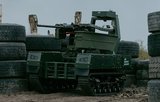
Western armies continue to test uncrewed ground vehicles, but wider procurement will depend on turning ambitions for autonomy into defined operational roles and funded requirements.

Framework contracts and leasing options aim to shorten acquisition timelines, while manufacturing partnerships could help suppliers scale production to meet allied demand.
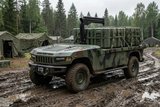
The US is pursuing multiple UGV programmes, from commercial robotic platforms to new autonomy technologies. The combination of these efforts could prove key to turning ambition into operational capability.

NATO is looking to artificial intelligence to provide integration between different C2 systems to create a common operational picture, potentially offering a faster route to interoperability than the slow-moving processes of NATO standards committees.

The large-scale exercise in Latvia was the culmination of three experimentation initiatives to see how platforms, weapons and systems could fit into the alliance’s Eastern Flank Deterrence Initiative. As well as forces, it brought together companies and equipment.

Canada plans to acquire at least 120 uncrewed aerial systems through two competitions with combined funding ceilings of C$32 million.

Connect with us on socials


