Fibrotex develops mobile camouflage systems for US clients
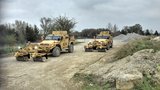
Fibrotex’s Mobile Camouflage Systems (MCS). (Photo: Fibrotex)
Fibrotex’s camouflage triad will be complete with the development of mobile camouflage systems.


On the heels of a significant combined US Army and Marine Corps purchase order to provide more Ultra-Lightweight Camouflage Net System Increment I (ULCANS INC1) program of record capabilities, Fibrotex, a company that designs signature management systems, is simultaneously developing Mobile Camouflage Systems (MCS).
At the Modern-Day Marine (MDM) expo in Washington, DC, on 27-29 June, Col (US Army Ret) Bert Ges, US Army Business Development Director for Fibrotex USA, told Shephard about the company’s upcoming objectives for US clients.
Fibrotex already produces individual and static cover & concealment systems for the US Military, ‘the third category of the triad is
Our news & analysis is now part of Defence Insight®
A Basic-level or higher Defence Insight subscription is now required to view this content.

More from Land Warfare
-
![AUSA 2026: companies adapt munitions and missiles for greater effect at lower costs]()
AUSA 2026: companies adapt munitions and missiles for greater effect at lower costs
Rather than developing entirely new weapons, defence companies are looking to build on existing weapons and systems to deliver greater capability, control costs and accelerate fielding.
-
![AUSA 2026: CUAS market expands as suppliers target new threats and operational requirements]()
AUSA 2026: CUAS market expands as suppliers target new threats and operational requirements
New developments from MARSS, MyDefence, Mountain Horse Solutions and Rafael suggest that future counter-drone protection will increasingly depend on combining advanced detection, rapid interception and integrated defensive networks.
-
![US Army seeks CAML-Lite autonomous launcher prototypes for 2027 live-fire trials]()
US Army seeks CAML-Lite autonomous launcher prototypes for 2027 live-fire trials
The optionally crewed, C-130-transportable platforms would combine modular offensive and defensive fires with autonomous resupply, with demonstrations planned for Talisman Sabre 2027.