


Canada accelerates uncrewed aerial system procurement for NATO and Arctic forces
Canada plans to acquire at least 120 uncrewed aerial systems through two competitions with combined funding ceilings of C$32 million.


The Mk I tactical bayonet fitted to a BREN 2 assault rifle. (Photo: Czech MoD/Michal Voska)
The CZ BREN 2 assault rifle for Czech infantry now includes the new Mk I tactical bayonet, developed by the Army of the Czech Republic and manufactured by CZUB.
All variants of the BREN 2 apart from the 11-inch barrel version are compatible with the new bayonet, the Czech MoD noted on 18 February.
‘During testing, the knife underwent a number of demanding tests: it had to withstand chopping, leveraging, breaking, high load on the handle and violent handling both in tactical gloves and in severe contamination,’ it added.
The BREN 2 can be configured to fire 5.56mm or 7.62mm ammunition at up to 850 rounds per minute. The rifle has a fully ambidextrous fire selector, magazine release, bolt release and charging handle.
There is also a simplified trigger system with safe, semi-automatic and full automatic positions.
The army began equipping selected units with the BREN 2 PPS 7.62mm sniper rifle at the end of 2021, under a framework agreement with CZUB for up to 39,000 rifles that was signed in April 2020.
The BREN 2 PPS replaces the SVD Dragunov and SVDN-3 Tiger semi-automatic sniper rifle.


Canada plans to acquire at least 120 uncrewed aerial systems through two competitions with combined funding ceilings of C$32 million.
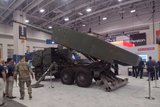
New counter-drone technologies, autonomous launchers and manufacturing modernisation initiatives highlighted emerging opportunities for defence suppliers, while the UK advanced a major military vehicle procurement programme.

Non-US companies are increasingly looking to establish subsidiary and partnerships to access the potential billions of dollars of vehicle and land systems contracts and there has already been some success.

Pearson Engineering has provided equipment and engineering expertise to the Armed Forces of Ukraine since the beginning of the full-scale Russian invasion in 2022. The British company is now working to deepen engagement with the Ukrainian defence industry, expanding its support for the country’s population and laying the foundations for future technological innovation.
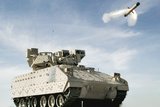
Rather than developing entirely new weapons, defence companies are looking to build on existing weapons and systems to deliver greater capability, control costs and accelerate fielding.

With a production rate of more than 10 million vehicles annually, the US commercial car and vehicle manufacturing base is second only to China. Defence companies are looking at how the vehicles, technology and manufacturing capability can support programmes.

Connect with us on socials


