CATV contract is to be signed this year
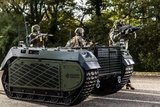
CATV will be based on the Swedish BvS10 with adaptations to meet the other nations’ requirements. (Photo: FMV)
An invitation to tender was sent to BAE Systems Hägglunds in December 2021 to acquire 500-900 platforms based on the latest version of the BvS10.


Germany, Sweden, the Netherlands and the UK will sign a contract to purchase 500-900 vehicles under the Collaborative All-Terrain Vehicle (CATV) programme with deliveries starting in 2023, as the four militaries seek to enhance their Arctic capabilities.
Sweden, as the lead nation and Central Purchasing Body, issued an invitation to tender (ITT) to BAE Systems Hägglunds in December 2021 to acquire a platform based on the latest version of the BvS10.
A company spokesperson confirmed that BAE Systems Hägglunds is now working on preparing a response to the ITT.
‘The intended contract is a framework agreement with the possibility for
Our news & analysis is now part of Defence Insight®
A Basic-level or higher Defence Insight subscription is now required to view this content.


More from Land Warfare
-
![Trans-European iMUGS2 uncrewed systems programme set for three-day exercise in 2028]()
Trans-European iMUGS2 uncrewed systems programme set for three-day exercise in 2028
The next stage of the Integrated Modular Unmanned Ground System (iMUGS) programme, dubbed iMUGS2, was launched in November 2025. Three major demonstrations are planned before the end of 2028.
-
![How joint ventures are expanding Rheinmetall's munitions portfolio (video)]()
How joint ventures are expanding Rheinmetall's munitions portfolio (video)
Roman Köhne, CEO of Rheinmetall's Weapon and Ammunition Division, discusses the company's announcements at Eurosatory 2026, including developments in defence technology, precision systems, industrial partnerships and future capability programmes.
-
![Push strengthens for a second JLTV supplier]()
Push strengthens for a second JLTV supplier
A move, launched in May, could lead to a second supplier for the US Marines Corps’ Joint Light Tactical Vehicle requirement. Meanwhile, Wisconsin elected representatives have been pushing for necessary funding to be included in the FY27 budget.