


Companies downselected for British Army vehicle programme
It is believed that three companies did not make the downselect but a dark horse in Spain’s Iturri is believed to have got through.


CACI International will continue supporting the US Army’s Night Vision and Electronic Sensors Directorate (NVESD), under a task order announced by the company on 5 March.
Under the $43 million task order contract, CACI will continue providing engineering support, including modelling and simulation of sensor and imaging systems for the NVESD, also known as the Night Vision Lab at Fort Belvoir, Virginia.
NVESD conducts research and development of night vision and sensor technologies, including surveillance systems and infrared weapon sights. These technologies are aimed at improving the effectiveness of the army in limited visibility and night time conditions.
The contract will see CACI provide simulation and modelling services to help NVESD evaluate sensor system technology and concepts in order to determine their effectiveness in relevant scenarios. CACI will also help develop enhancements that increase the target acquisition, surveillance and reconnaissance capabilities of the armed forces.
The company has extensive experience in providing technical, management, and engineering solutions to the NVESD. These support solutions include mobile training facilities maintenance as well as live, virtual, and constructive simulation training, along with operating a systems integration laboratory for C4ISR systems.


It is believed that three companies did not make the downselect but a dark horse in Spain’s Iturri is believed to have got through.
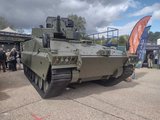
Air defence and counter-drone weapons continue to be developed, tested and demonstrated in anticipation of growing demand, with most solutions designed to be platform-agnostic and readily integrated onto suitable platforms.
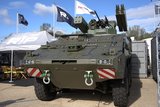
The US Army began its search for a 155mm tracked mobile tactical cannon in an effort that Shephard forecasts could be worth billions of dollars. Meanwhile, the UK DVD exhibition saw companies showcase their offerings for the British Army’s mobility and air defence requirements.
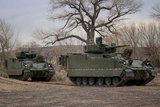
The development demonstrates how the platform could provide additional firepower and growth potential while the US Army progresses its long-term replacement for the Bradley.
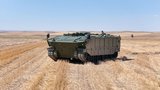
FNSS and PT Pindad are progressing the Indonesian tracked armoured personnel carrier programme as local production gets under way.
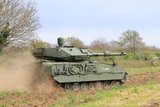
Firing trials of the Tulpar and Leonardo Hitfact Mk II combination follow an integration programme covering mechanical, electrical, electronic and software interfaces.

Connect with us on socials


