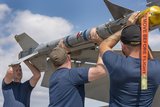
Brazilian Army selects Saab RBS 70


Saab will supply the RBS 70 Very Short Range Air Defence (VSHORAD) system to the Brazilian Army under a £7.4 million contract announced on 3 March. The equipment will be used to protect strategic infrastructure during a number of upcoming events in Brazil, including the 2014 FIFA World Cup, and the 2016 Summer Olympics in Rio de Janeiro.
The contract will see the company supply RBS 70 man-portable launchers, Mk II type missiles, simulators, night vision equipment, a test set, maintenance tools, spares, associated equipment, and training for the weapon’s operators and maintainers.
Görgen Johansson, head of Saab’s business area dynamics, said: ‘This is very positive and it further proves the capability of the RBS 70 system which, by this contract, has been acquired by 19 countries located on all five continents. The system´s unique capabilities, reliability and very low life-cycle cost are highly appreciated by all users in different exacting environments.’
First deliveries of the equipment are scheduled to begin during 2014.




More from Land Warfare
-
![British Army Land Rover replacement plan inches forward]()
British Army Land Rover replacement plan inches forward
The UK Ministry of Defence has proposed a selection date of May 2027 for the Land Rover replacement requirement, with deliveries expected through to 2036. Next month’s DVD exhibition will be a key shop window for bidders.
-
![Snow patrol and access all areas: the Arctic all-terrain vehicles market grows]()
Snow patrol and access all areas: the Arctic all-terrain vehicles market grows
The procurement and planned procurement of articulated tracked all-terrain vehicles is being driven by a need to replace older platforms and an acknowledgement of a capability gap for Arctic regions.
-
![Push strengthens for a second JLTV supplier]()
Push strengthens for a second JLTV supplier
A move, launched in May, could lead to a second supplier for the US Marines Corps’ Joint Light Tactical Vehicle requirement. Meanwhile, Wisconsin elected representatives have been pushing for necessary funding to be included in the FY27 budget.
-
![Canada reveals first requirements for future long-range air-to-air missile]()
Canada reveals first requirements for future long-range air-to-air missile
Exclusive: Ottawa says its future NORAD interceptor must be highly stealthy, resistant to jamming and capable of engaging threats at very long range, while leaving the competition open to domestic and international suppliers.