BAE rethinks suspension systems


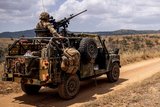
BAE Systems is working on a new type of bendable titanium alloy suspension system that will allow suspension systems to ‘bounce back’ into shape following explosive impacts on future military vehicles.
The current approach to protecting vehicles against IED strikes focuses on protecting the vehicle hull to protect passengers. With the suspension left vulnerable, damaged vehicles must be rescued by other another military unit.
Initial tests on a prototype that allows the flexible ‘memory alloy’ suspension to recover after a blast so that the vehicle can continue its mission have proved successful, and BAE Systems believes that it could be made available within a decade.
Using the memory metal - first developed by the US Naval Ordnance Laboratory in the 1960s – also enables the spring to be removed from the suspension.
Marcus Potter, head of mobility at BAE Systems Land UK, said: ‘This unique use of memory metals could prove a real game-changer for combat vehicles taking part in operations. Being able to adapt to changing situations is hugely important to maintaining effectiveness, and this application of bendable titanium could give armed forces the required flexibility – and survivability – to complete tasks in challenging areas.’

You may also like
More from Land Warfare
-
![Hanwha debuts with US Army deal worth up to $3.6 billion as it eyes future M109 replacement]()
Hanwha debuts with US Army deal worth up to $3.6 billion as it eyes future M109 replacement
The Mobile Tactical Cannon is to replace the US Army’s M777 towed howitzers which could result in the procurement of almost 500 systems at an estimated $3.59 billion.
-
![US pours another $23 billion into Arsenal of Freedom to ramp up missile production]()
US pours another $23 billion into Arsenal of Freedom to ramp up missile production
The US Department of Defense (DoD) is spending billions of dollars to accelerate missile production to meet demands from the war against Iran and requirements in Ukraine. Manufacture of SM-3 and PAC-3 interceptors is being ramped up, alongside a $22.9 billion commitment to Tomahawk cruise missiles.
-
![Rheinmetall advances longer 155mm ordnance with 30% range increase]()
Rheinmetall advances longer 155mm ordnance with 30% range increase
Rheinmetall has begun initial firing trials of a new 155mm/60-calibre artillery ordnance that could deliver up to 30% greater range than its existing 155mm/52-calibre system, as production of the current gun expands across Germany and the UK.
-
![Trans-European iMUGS2 uncrewed systems programme set for three-day exercise in 2028]()
Trans-European iMUGS2 uncrewed systems programme set for three-day exercise in 2028
The next stage of the Integrated Modular Unmanned Ground System (iMUGS) programme, dubbed iMUGS2, was launched in November 2025. Three major demonstrations are planned before the end of 2028.
-
![British Army Land Rover replacement plan inches forward]()
British Army Land Rover replacement plan inches forward
The UK Ministry of Defence has proposed a selection date of May 2027 for the Land Rover replacement requirement, with deliveries expected through to 2036. Next month’s DVD exhibition will be a key shop window for bidders.