BAE Systems wins PIM contract


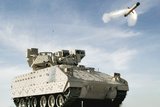
BAE Systems is to continue its work on the US Army’s Paladin Integrated Management (PIM) programme, following the award of a $313 million contract modification, announced 18 January 2012. The award will see BAE Systems providing additional engineering design, logistics development and test evaluation support to complete the Engineering and Manufacturing Development phase of the PIM programme.
BAE Systems was awarded a $63.9 million research and development contract in August 2009 to produce five Self Propelled Howitzers and two Carrier, Ammunition, Tracked vehicles. The seven prototypes were delivered to the US Army, on schedule, in May 2011. The PIM programme will ensure the sustainability of the self-propelled howitzer fleet, and assist the US Army in supporting the testing and production planning efforts.
The PIM howitzer uses the existing main armament and cab structure of a Paladin M109A6 and replaces unique vehicle chassis components with modern components common to the Bradley family of vehicles incorporated in an improved and more survivable chassis structure. PIM incorporates a state-of the-art ‘digital backbone’ and power generation capability and integrates electric elevation and traverse drives, electric rammer and digital fire control system. The upgrade of the PIM ensures commonality with existing systems in the Heavy Brigade Combat Team, and reduces its logistical footprint and operational sustainability costs by replacing obsolete components.
The contract was awarded by US Army TACOM and is expected to begin in February 2012 with anticipated completion in January 2015.
Related Programmes in Defence Insight



More from Land Warfare
-
![AUSA 2026: companies adapt munitions and missiles for greater effect at lower costs]()
AUSA 2026: companies adapt munitions and missiles for greater effect at lower costs
Rather than developing entirely new weapons, defence companies are looking to build on existing weapons and systems to deliver greater capability, control costs and accelerate fielding.
-
![With changing patterns in Middle Eastern procurement, is Europe missing out?]()
With changing patterns in Middle Eastern procurement, is Europe missing out?
Traditional suppliers are struggling to meet the Middle East’s armoured vehicle modernisation needs, creating opportunities for South Korean manufacturers and regional defence industries.
-
![AUSA 2026: CUAS market expands as suppliers target new threats and operational requirements]()
AUSA 2026: CUAS market expands as suppliers target new threats and operational requirements
New developments from MARSS, MyDefence, Mountain Horse Solutions and Rafael suggest that future counter-drone protection will increasingly depend on combining advanced detection, rapid interception and integrated defensive networks.