BAE Systems to supply training ammo for Kuwaiti Abrams


BAE Systems is close to providing training ammunition and related equipment for Kuwait Army M1A2 Abrams MBTs, after the US State Department approved a $59.6 million FMS deal.
The deal still requires approval from Congress.
‘The proposed sale will improve Kuwait’s capability to meet current and future threats by enabling continued employment of the M1A2 Abrams main battle tank and supporting modernisation of the country’s tank fleet,’ the US Defense Security Cooperation Agency announced on 28 July.
It added: ‘The training ammunition will be used to qualify Kuwait’s M1A2 tanks, which will enhance Kuwait’s ability to protect border regions and key land-based infrastructure.’
The FMS deal includes 10,260 cartridges of 120mm calibre M865 Target Practice Cone Stabilized Discarding Sabot Tracer; 9,810 cartridges of 120mm calibre M1002 Target Practice Multipurpose Tracer; plus 215,000 cartridges of .50 cal and 600,000 cartridges of 7.62mm ammunition.
Kuwait purchased 218 new M1A2s in 1992 and the MBTs were delivered in 1995-1997. A FMS worth US$1.7 billion was approved in December 2016 to upgrade all these tanks to the M1A2 SEPv2 standard.
According to Shephard Defence Insight, the Kuwaiti M1A2 fleet has an out-of-service date of 2050.
As part of our promise to deliver comprehensive coverage to our Defence Insight and Premium News subscribers, our curated defence news content provides the latest industry updates, contract awards and programme milestones.
Related Equipment in Defence Insight



More from Land Warfare
-
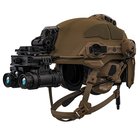
![SOF Week 2026: Galvion unveils Cortex Evo integrated combat helmet]()
SOF Week 2026: Galvion unveils Cortex Evo integrated combat helmet
Galvion has introduced its Cortex Evo integrated head system, combining ballistic protection, power, data and processing capabilities within a single combat helmet architecture.
-
![Why cost-effective flexible networks are the key to C-UAS success]()
Why cost-effective flexible networks are the key to C-UAS success
The widespread use of drones and loitering munitions in current conflicts has tilted the balance in favour of the attacking force, both operationally and economically. EOS’s Dr Andreas Schwer tackles the question of what kind of C-UAS defences are needed to protect battlefield forces, and even entire countries.
-
![The C-UAS challenge: Finding the threat before it finds you]()
The C-UAS challenge: Finding the threat before it finds you
How Teledyne FLIR Defense C-UAS solutions – and sensors optimized for third-party systems integrators – deliver early drone detection and decision advantage for UAS threat response
-
![UK finally signs $1.35 billion British Army howitzer deal but with scaled-back numbers]()
UK finally signs $1.35 billion British Army howitzer deal but with scaled-back numbers
The deal will provide the British Army with five times the number of guns it currently operates as an interim measure, but it still leaves the force with comparatively fewer weapons than partner forces.