Australia’s Advanced Navigation to provide navigation units for Redback IFVs
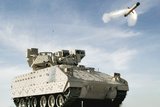
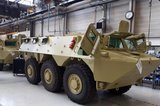
A Redback IFV conducting a live fire demonstration during LAND 400 Phase 3 user evaluation trials in 2021. (Photo: Hanwha Defence Australia)
Advanced Navigation’s Boreas D70 navigation units have been designed to provide capability where satellite navigation is denied or unreliable.


Hanwha Defence Australia (HDA) has awarded Advanced Navigation a A$8.7 million (US$5.9 million) contract for 138 Boreas D70 navigation units for the Australian Army’s future fleet of Redback infantry fighting vehicles.
Boreas D70 units are a strategic-grade digital fibre-optic gyroscope inertial navigation system and can prove valuable when operating in contested environments where the accuracy or availability of satellite systems cannot be guaranteed.
The units will be installed on 129 Redback IFVs being manufactured by HDA under the LAND 400 Phase 3 programme. The programme, which includes other vehicles, has a value of up to A$7 billion and is the largest ever single procurement for the Australian Army.
Positioning navigation and timing (PNT) technologies are seen as key in a challenged communications environment with the White House Office of Science and Technology citing it on its 2024 list of Critical and Emerging Technologies.
The technology also comes within Australia, UK and US (AUKUS) agreement Pillar II which focuses on developing advanced capabilities for deeper integration of security and defence-related science, technology, industrial bases and supply chains.
The contract follows a deal signed on12 September between the two companies to jointly develop assured positioning navigation and timing technologies.
Related Programmes in Defence Insight
Project Land 400 Phase 3 [Australia]
Related Equipment in Defence Insight


More from Land Warfare
-
![AUSA 2026: companies adapt munitions and missiles for greater effect at lower costs]()
AUSA 2026: companies adapt munitions and missiles for greater effect at lower costs
Rather than developing entirely new weapons, defence companies are looking to build on existing weapons and systems to deliver greater capability, control costs and accelerate fielding.
-
![AUSA 2026: CUAS market expands as suppliers target new threats and operational requirements]()
AUSA 2026: CUAS market expands as suppliers target new threats and operational requirements
New developments from MARSS, MyDefence, Mountain Horse Solutions and Rafael suggest that future counter-drone protection will increasingly depend on combining advanced detection, rapid interception and integrated defensive networks.
-
![US Army seeks CAML-Lite autonomous launcher prototypes for 2027 live-fire trials]()
US Army seeks CAML-Lite autonomous launcher prototypes for 2027 live-fire trials
The optionally crewed, C-130-transportable platforms would combine modular offensive and defensive fires with autonomous resupply, with demonstrations planned for Talisman Sabre 2027.