USS Gerald R Ford receives first AWE


The US Navy’s new aircraft carrier, USS Gerald R Ford, has received its first advanced weapons elevator (AWE), the navy announced on 16 January.
AWE Upper Stage 1 was turned over to the ship on 21 December, following testing and certification at Huntington Ingalls Industries-Newport News Shipbuilding, where the ship is currently undergoing its post-shakedown availability.
USS Gerald R Ford is the first Ford-class aircraft carrier, featuring new AWEs that are controlled via electromagnetic, linear synchronous motors, which allow for quick movement of weapons. The new design will allow the ship to be able to move up to 24,000lbs of ordnance at 150ft per minute.
The vessel features three upper stage elevators that move ordnance between the main deck and flight deck, and seven lower stage elevators that move ordnance between the main deck and the lower levels of the ship.
A separate utility elevator will serve as a dedicated elevator to move both ordnance and supplies, and also serve as a means to medically evacuate injured personnel from the flight deck to the hangar bay. This allows the ten main AWEs and Ford’s three aircraft elevators to be dedicated to their primary missions of ordnance and aircraft movement during real-world operations.


More from Naval Warfare
-
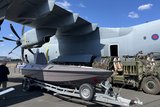
![A400M trial demonstrates airborne deployment of uncrewed surface vessel]()
A400M trial demonstrates airborne deployment of uncrewed surface vessel
Kraken Technology Group’s A400M airdrop of a K3 Scout uncrewed surface vessel points to a new way for navies to insert USVs into contested waters, bypassing ports and motherships.
-
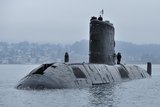
![Babcock onshores 85% of Canada’s submarine supply chain as it eyes future CPSP programme]()
Babcock onshores 85% of Canada’s submarine supply chain as it eyes future CPSP programme
By moving most of the Royal Canadian Navy’s submarine supply chain into Canada, Babcock Canada is driving to strengthen sovereign sustainment capabilities while preparing to compete to maintain the future Canadian Patrol Submarine Project.
-
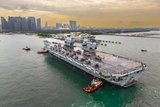
![From the seas to the web: the changing shape of UK defence in Southeast Asia]()
From the seas to the web: the changing shape of UK defence in Southeast Asia
As his final engagement before leaving his post as the head of the British defence staff for Southeast Asia and defence adviser to Singapore, Brigadier Eddie Maskell-Pedersen spoke with Shephard about maritime security, cyber cooperation and long-term partnerships.
-
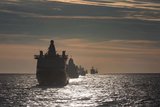
![Baltic naval priorities shift towards mine warfare and versatile platforms]()
Baltic naval priorities shift towards mine warfare and versatile platforms
Baltic states are investing in mine warfare, uncrewed systems and multirole platforms as major warship purchases remain scarce, industry sources indicate.