USCG’s MH-60T SLEP moves to next phase


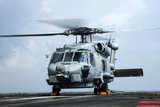
The US Coast Guard’s (USCG) MH-60T Jayhawk Service Life Extension Program (SLEP) has received approval from the US Department of Homeland Security to proceed to the next acquisition phase, the agency announced on 20 March.
This approval allows the programme to move ahead with analysing options for keeping the service’s medium range recovery helicopter fleet operational through the mid-2030s, until it is replaced under the Department of Defense’s Future Vertical Lift initiative.
The USCG is examining two options for the service life extension work. The first is to replace the existing fleet with low-flight-hour navy HH-60H and SH-60F Seahawk hulls after structurally converting them into the MH-60T configuration.
The second option is to replace parts in the USCG’s current MH-60Ts to extend each helicopter’s service life by another 10,000 flight hours.
Following the conversion of four navy helicopters, the programme’s next steps are to conduct an engineering analysis to inform the alternatives analysis and decide the more resource-efficient course of action, and begin developing the programme life cycle cost estimate.
Related Equipment in Defence Insight


More from Naval Warfare
-
![How France’s SNLE 3G programme is reshaping the naval nuclear industrial base]()
How France’s SNLE 3G programme is reshaping the naval nuclear industrial base
Extending far beyond a four-submarine replacement programme, France’s ballistic missile submarine effort is a decades-long industrial effort designed to preserve the country’s ability to build and sustain nuclear-powered strategic platforms.
-
![China’s mineral processing dominance exposes naval supply chain vulnerabilities]()
China’s mineral processing dominance exposes naval supply chain vulnerabilities
Competition for critical minerals, and China’s dominance of their processing, is emerging as a decisive factor in future naval procurement programmes.
-
![Suppliers await next step in Australia’s mine warfare transition]()
Suppliers await next step in Australia’s mine warfare transition
Australia’s mine countermeasure capability remains in flux as the Huon-class nears retirement, but accelerated investment in autonomous systems is opening a path for industry.
-
![Can the US Navy ask Indo-Pacific allies to do more while training with them less?]()
Can the US Navy ask Indo-Pacific allies to do more while training with them less?
As the Iran War draws US ships and marine corps units away from the Indo-Pacific, curtailed exercises and a temporary carrier gap are exposing tensions between Washington’s demand for more self-reliant allies and the joint training needed to realise that ambition.
-
![How could Rheinmetall’s GMF 140 fit with ongoing programmes in North America?]()
How could Rheinmetall’s GMF 140 fit with ongoing programmes in North America?
With Canada committed to its River-class replacement and the USN pursuing a lower-cost frigate, Rheinmetall will need to demonstrate where the GMF 140 can fill a capability gap in the North American fleet.