GORTT to order two Austal patrol boats


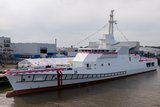
The Government of Republic of Trinidad and Tobago (GORTT) intends to purchase two Austal Cape-class patrol boats for border protection operations, Austal announced on 29 July.
The new boats will join the existing coast guard fleet as well as six in-service Austal fast patrol craft acquired in 2009.
The order is expected to be valued at AUD$100 million ($74 million) along with a multi-year ongoing maintenance and support package.
The 58m-long Cape class features a complete aluminium monohull and has been developed to combat the full range of maritime security threats. The vessel has a long 4000 nautical mile range and 28-day patrol cycle and is able to accommodate a crew of up to 22. The vessel also supports two high speed 7.3m rigid hull inflatable boats used for intercepting other vessels.
The new vessels will be built in Austal’s Henderson shipyard based in Western Australia. Delivery is expected to be in mid-2020.
In addition, Austal will also establish a service centre in Trinidad to support these vessels and any additional vessels requiring maintenance as determined by GORTT.
GORTT have requested that the purchase be supported by an EFIC finance package which will be developed specifically to support the program, for which EFIC have already supplied a letter of support. The sale of the vessels is conditional on final contracts being signed in the coming weeks, together with a conclusive offer from EFIC to GORTT.
It is expected that an initial, lower value design contract will be signed shortly to accelerate preparations for the main contract and ensure that the delivery schedule will be maintained.
Related Equipment in Defence Insight


More from Naval Warfare
-
![AUKUS heavyweight torpedo test raises questions over future armed UUV requirements]()
AUKUS heavyweight torpedo test raises questions over future armed UUV requirements
A heavyweight torpedo firing from the Royal Navy’s uncrewed submarine XV Excalibur suggests a shift beyond surveillance, with allied navies eyeing strike roles for large autonomous undersea vessels.
-
![Industrial teams prepare roadmap for Indonesia aircraft carrier transformation]()
Industrial teams prepare roadmap for Indonesia aircraft carrier transformation
Fincantieri and PT PAL have agreed on a framework to modernise the former Giuseppe Garibaldi, with drones, communications and broader Italian–Indonesian industrial ties involved.
-
![Five years on: where could opportunities emerge next for AUKUS Pillar II?]()
Five years on: where could opportunities emerge next for AUKUS Pillar II?
Payload commonality, combat systems and electronic warfare are emerging as likely priorities as the trilateral partnership balances building submarines with sharing industrial ecosystems.