RAN’s third AWD build underway


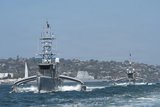
Construction on the third Air Warfare Destroyer (AWD) for the Royal Australian Navy (RAN) has begun, with the keel for the vessel laid by the AWD Alliance, it was announced on 20 November.
The vessel, Sydney, is the third and final Hobart Class DDG destroyer to be constructed for the programme to deliver the RAN its most capable warships to date.
In another milestone for the programme, initial combat systems activation has commenced on the first destroyer, Hobart. This vessel is set to commence sea trials in 2016.
The second destroyer, Brisbane, is on track to complete hull consolidation activities in December.
Peter Croser, AWD program manager, said: ‘We have achieved a number of critical milestones this year, from launching our first ship Hobart in May, to achieving 70 per cent completion on our second ship, Brisbane, and now commencing the hull consolidation phase for our third ship, Sydney.’
The AWD Alliance is responsible for delivering the three Hobart Class DDG destroyers and their support systems to the RAN. The alliance is made up of shipbuilder ASC, mission systems integrator Raytheon Australia and the Australian Department of Defence.



More from Naval Warfare
-
![US Navy to acquire and test uncrewed surface vessel prototypes by the end of FY2026]()
US Navy to acquire and test uncrewed surface vessel prototypes by the end of FY2026
The new autonomous surface vessels are planned to be operationally fielded in FY2027, following the completion of on-water trials.
-
![Hanwha Ocean and TKMS are firming up their Canadian next-gen submarine proposals]()
Hanwha Ocean and TKMS are firming up their Canadian next-gen submarine proposals
CPSP competitors are proposing platforms fitted with advanced, next-generation capabilities to be built and sustained in cooperation with the Canadian industry.
-
![UK’s $1 billion AUKUS support request signals strong ongoing US collaboration]()
UK’s $1 billion AUKUS support request signals strong ongoing US collaboration
The latest foreign military sales request from the UK has implications for the future of the programme and collaboration between the three nations.
-
![RTX Raytheon enhances SM-3 and SM-6 production capacity]()
RTX Raytheon enhances SM-3 and SM-6 production capacity
The expansion of the Redstone facility in Alabama will enable Raytheon to increase production of Standard Missiles in the location by 50% and support Washington in refilling stockpiles after recent operations have depleted the Pentagon’s reserves.