Lockheed to continue to Halifax class support


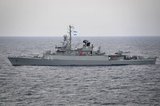
Lockheed Martin Canada has received a three-year contract extension to its in-service support contract for the Royal Canadian Navy’s 12 Halifax-class frigates.
The existing in-service support contract began in November 2008 with the award of the Halifax Class Modernization project. The contract also included support of the legacy Halifax class system prior to ships entering the shipyard for modernisation.
Combat management system (CMS) support includes hardware and software support for the CMS 330 and the CMS to combat subsystem interfaces, ancillary systems and tools, as well as the integration of new weapons, sensors and information sources.
Gary Fudge, VP and general manager of Lockheed Martin Canada Rotary Mission Systems, said: ‘We are pleased by the vote of confidence from our Royal Canadian Navy customer to continue this existing relationship. As part of our combat system integrator portfolio, Lockheed Martin Canada has established a world class in-service support team which is also being recognised by our international customers.’


More from Naval Warfare
-
![US Navy’s MQ-25 Stingray approaches carrier-integration tests]()
US Navy’s MQ-25 Stingray approaches carrier-integration tests
Boeing has outlined its upcoming precision-landing and carrier-airspace trials as MQ-25 manufacturing shifts towards Illinois, with initial Lot 1 deliveries expected in 2029.
-
![From Poland to the Pacific: Can Miecznik become a blueprint for other navies?]()
From Poland to the Pacific: Can Miecznik become a blueprint for other navies?
Babcock is taking its Polish industrial partnership approach to Denmark and New Zealand as navies seek sovereign shipbuilding skills alongside ships.
-
![Unsettled waters in the North: can navies still trust their Arctic acoustic maps?]()
Unsettled waters in the North: can navies still trust their Arctic acoustic maps?
The changing Arctic environment is creating new challenges for submarine detection, driving demand for distributed sensors, uncrewed underwater vehicles and real-time acoustic modelling.
-
![Aevex, Lockheed Martin and Thales deals highlight consolidation in naval technology]()
Aevex, Lockheed Martin and Thales deals highlight consolidation in naval technology
A wave of acquisitions is bringing specialist autonomy and underwater technology under the umbrella of larger defence contractors. As a result, navies may gain faster access to capability, but not necessarily a broader choice of suppliers.
-
![Italy’s DDX destroyer deal opens a decade of naval spending]()
Italy’s DDX destroyer deal opens a decade of naval spending
A €3.7 billion destroyer contract for Fincantieri and Leonardo is only the start, with submarines, corvettes and a new carrier pointing to more opportunities.
-
![Production-ready beats prototype-ready in the US Navy’s MUSV marketplace]()
Production-ready beats prototype-ready in the US Navy’s MUSV marketplace
HII, Saronic and Galliano Marine Services have won US Navy production contracts to supply medium uncrewed surface vessels. The marketplace approach behind them sets the bar for suppliers eyeing allied navy competitions.