AUVSI 2019: Unmanned technology driving naval change


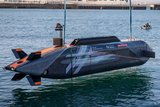
With the US Navy (USN) looking to spend up to $1 billion in the procurement and utilisation of unmanned maritime systems in the coming years, the service is eyeing a distributed lethality concept as a way to counter rising challenges to its decades-long dominance of the high seas.
The fielding of larger unmanned systems – both surface and subsurface – will serve as a way to bolster naval capabilities as countries, particularly in the Asia-Pacific region, increase fleet numbers to a degree that quantitative advantages previously held by the USN are diminished.
Speaking to delegates at AUVSI’s Xponential in Chicago,
Our news & analysis is now part of Defence Insight®
A Basic-level or higher Defence Insight subscription is now required to view this content.



More from Naval Warfare
-
![Canada assesses security equipment changes for Polar Icebreaker Imnaryuaq]()
Canada assesses security equipment changes for Polar Icebreaker Imnaryuaq
The Canadian Department of National Defence is evaluating communications and reconnaissance changes for CCGS Imnaryuaq’s expanded maritime security role, while retaining its 2032 acceptance target.
-
![All eyes on Royal Navy’s Type 93 market engagement as industry prepares bids]()
All eyes on Royal Navy’s Type 93 market engagement as industry prepares bids
Responses are due by 29 October as the Royal Navy tests the market, with BAE Systems’ Herne and MSubs’ Excalibur setting up a contest where payloads may decide the winner.
-
![US Navy’s MQ-25 Stingray approaches carrier-integration tests]()
US Navy’s MQ-25 Stingray approaches carrier-integration tests
Boeing has outlined its upcoming precision-landing and carrier-airspace trials as MQ-25 manufacturing shifts towards Illinois, with initial Lot 1 deliveries expected in 2029.
-
![From Poland to the Pacific: can Miecznik become a blueprint for other navies?]()
From Poland to the Pacific: can Miecznik become a blueprint for other navies?
Babcock is taking its Polish industrial partnership approach to Denmark and New Zealand as navies seek sovereign shipbuilding skills alongside ships.