US approves $1 billion in Saudi defence contracts


The US formally approved defence contracts totalling more than $1 billion with Saudi Arabia on 22 March, as the kingdom’s crown prince continued his American tour.
The US State Department confirmed it had green-lighted a $670 million deal for anti-tank missiles, a $106 million contract for helicopter maintenance and $300 million for ground vehicle parts.
An official said the deals had been in the pipeline since US President Donald Trump has announced more than $100 billion in possible new contracts on a visit to Riyadh in 2017.
The Defense Security Cooperation Agency said: ‘This proposed sale will support US foreign policy and national security objectives by improving the security of a friendly country.’
Western governments are under pressure from campaigners, including some US lawmakers, to halt or limit arms sales to Saudi Arabia as its forces fight in Yemen’s brutal civil war.
But the US, France and Britain continue to pursue lucrative deals to sell and maintain equipment in the kingdom’s vast, high-tech arsenal – and Riyadh is an avid client.
In theory, the US Congress could still block the latest deals announced on 22 March, but on 20 March the Senate voted down a bill to halt US support for the Saudi intervention in Yemen.
These contracts are therefore now expected to be nodded through after the State Department and Pentagon gave the go-ahead and Trump publicly celebrated the prospect of the sales.
Saudi Arabia’s young crown prince and de facto ruler Mohammed Bin Salman is part-way through a three-week tour of America that has already taken him to friendly talks in Trump’s White House.
The largest of the three contracts is for 6,600 TOW 2B anti-tank missiles, made by US giant Raytheon.
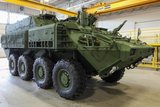
The next biggest covers spare parts and maintenance for the Saudi ground forces’ pool of US-built Abram tanks, Bradley fighting vehicles, light armored vehicles, howitzers and Humvees.
The last continues a support contract for the Saudi fleet of AH-64D and E Apache attack helicopters, UK-60L Black Hawk utility choppers and Schweizer and Bell scouts.
Related Equipment in Defence Insight



More from Defence Notes
-
![US Pentagon pushes for major reform of defence acquisition system]()
US Pentagon pushes for major reform of defence acquisition system
The US Department of Defense has requested new contracting authorities from Congress, using the Army's MV-75 Cheyenne programme to demonstrate how competition, digital engineering and closer industry collaboration could accelerate acquisitions.
-
![US speeds up B61-13 nuclear bomb production as programme moves further ahead of schedule]()
US speeds up B61-13 nuclear bomb production as programme moves further ahead of schedule
The US government plans to accelerate production even further after achieving key B61-13 milestones months ahead of schedule, as the programme advances amid growing US-China strategic competition.
-
![Canada’s C$2 billion ACSV deal reinforces new defence industrial strategy as allies align]()
Canada’s C$2 billion ACSV deal reinforces new defence industrial strategy as allies align
General Dynamics Land Systems-Canada is the country’s first strategic partner under the Defence Industrial Strategy’s Strategic Partnership Framework, an effort to provide companies with confidence to invest and boost the defence labour force.
-
![New UK armed forces minister frames High North defence as vital to “homeland security”]()
New UK armed forces minister frames High North defence as vital to “homeland security”
The UK’s Minister for the Armed Forces Louise Sandher-Jones made her first appearance in the role before the House of Commons Defence Committee this week to highlight efforts to improve capability in the High North.
-
![Canada seeks to strengthen industrial ties with the US on classified programmes]()
Canada seeks to strengthen industrial ties with the US on classified programmes
Ottawa explores expanding defence-industrial cooperation with Washington into sensitive programmes, an approach that could reshape NORAD modernisation, strengthen North American supply chains and create new opportunities for defence contractors.