


From systems integrator to multi-domain solutions provider (video)
Philipp von Brandenstein, Head of Corporate Communications at Rheinmetall, explains how Eurosatory 2026 marked a new stage in the company's evolution.


Supercharging Science will take place on the 22 July 2021. (Photo: Government Office for Science)
Doug Umbers, interim chief executive of Dstl, has released an open letter urging the best minds in industry, academia, engineering, science and technology to work with the UK agency to combat future threats.
Umbers began by highlighting the ‘crucial role’ science and technology had in developing a response to coronavirus ‘at breakneck speed’.
The response to coronavirus should be the rallying cry, inspiring experts to apply this level of determination and efficiency to future challenges.
These challenges range ‘from hostile states and terrorist groups to global challenges such as pandemics and climate change.’
Dstl will provide major resources to the UK science and technology community. It plans to spend ‘in the region of an extra £1 billion [on R&D] over the next four years to tackle the threats we face beyond COVID-19’.
Umbers finished with a call to action, the supplier event Supercharging Science, where industry leaders, relevant organisations and motivated individuals can discover opportunities to get involved with Dstl’s plan for the future.
This open letter follows Prime Minister Boris Johnson’s announcement that the UK should strive to obtain ‘science superpower status’. This goal has been reinforced by the Integrated Review, which promised the country would spend 2.4% of its GDP on R&D by 2027.


Philipp von Brandenstein, Head of Corporate Communications at Rheinmetall, explains how Eurosatory 2026 marked a new stage in the company's evolution.

The US Department of Defense has requested new contracting authorities from Congress, using the Army's MV-75 Cheyenne programme to demonstrate how competition, digital engineering and closer industry collaboration could accelerate acquisitions.
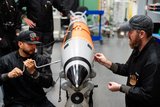
The US government plans to accelerate production even further after achieving key B61-13 milestones months ahead of schedule, as the programme advances amid growing US-China strategic competition.

General Dynamics Land Systems-Canada is the country’s first strategic partner under the Defence Industrial Strategy’s Strategic Partnership Framework, an effort to provide companies with confidence to invest and boost the defence labour force.

The UK’s Minister for the Armed Forces Louise Sandher-Jones made her first appearance in the role before the House of Commons Defence Committee this week to highlight efforts to improve capability in the High North.

Ottawa explores expanding defence-industrial cooperation with Washington into sensitive programmes, an approach that could reshape NORAD modernisation, strengthen North American supply chains and create new opportunities for defence contractors.

Connect with us on socials


