Singapore to buy four F-35s, with option for eight more


Singapore plans to buy four US-made F-35 jet fighters to update its ageing current fleet, the defence minister said Friday 1 March 2019.
The city-state, which has one of Asia’s best-equipped militaries, announced in January it had opted for the Lockheed Martin jets over rivals from Europe and China, and planned to first buy a small number before deciding on a full fleet.
Giving an update on the plans, Defence Minister Ng Eng Hen told parliament that Singapore ‘will request an initial acquisition of four F-35s, with the option of a subsequent eight if we decide to proceed’.
The current price of an F-35 ranges from $90 million to $115 million, he said, adding the cost had been steadily falling due to healthy orders from around the world.
Ng said the sale had to be approved by US Congress, but had the backing of the US administration.
Singapore has for several years been assessing which fighter jet should replace its current fleet of F-16s, which are due to be taken out of service in around a decade.
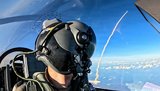
The F-35 is a supersonic plane whose advanced stealth characteristic allow pilots to avoid detection by radars, according to Lockheed Martin. Its advanced electronic warfare capabilities enable pilots to locate and track enemy forces, jam radars and disrupt attacks.
The Singapore military also has F-15 fighter jets, Apache helicopters and submarines in its arsenal.




More from Defence Notes
-
![From systems integrator to multi-domain solutions provider (video)]()
From systems integrator to multi-domain solutions provider (video)
Philipp von Brandenstein, Head of Corporate Communications at Rheinmetall, explains how Eurosatory 2026 marked a new stage in the company's evolution.
-
![Canada’s C$2 billion ACSV deal reinforces new defence industrial strategy as allies align]()
Canada’s C$2 billion ACSV deal reinforces new defence industrial strategy as allies align
General Dynamics Land Systems-Canada is the country’s first strategic partner under the Defence Industrial Strategy’s Strategic Partnership Framework, an effort to provide companies with confidence to invest and boost the defence labour force.
-
![New UK armed forces minister frames High North defence as vital to “homeland security”]()
New UK armed forces minister frames High North defence as vital to “homeland security”
The UK’s Minister for the Armed Forces Louise Sandher-Jones made her first appearance in the role before the House of Commons Defence Committee this week to highlight efforts to improve capability in the High North.
-
![Canada seeks to strengthen industrial ties with the US on classified programmes]()
Canada seeks to strengthen industrial ties with the US on classified programmes
Ottawa explores expanding defence-industrial cooperation with Washington into sensitive programmes, an approach that could reshape NORAD modernisation, strengthen North American supply chains and create new opportunities for defence contractors.