US watching brief turns the screw on Russia’s Libyan foray


A recent series of declassified intelligence images published by US Africa Command (AFRICOM) showing Russian fighter jets positioned in Libya looks to have unravelled consistent attempts to conceal overt participation in the proxy war by the Putin administration.
With the fighters said to have been delivered by the Kremlin to support Libyan National Army (LNA)-affiliated private military contractors, Russia stands accused by the US of delivering ‘at least’ 14 unmarked aircraft to Al Jufra Air Base and attempting to ‘tip the scales’ in favour of the LNA, although Moscow has since denied sending any military personnel to Libya.
Nevertheless, a US
Our news & analysis is now part of Defence Insight®
A Basic-level or higher Defence Insight subscription is now required to view this content.



More from Defence Notes
-
![US speeds up B61-13 nuclear bomb production as programme moves further ahead of schedule]()
US speeds up B61-13 nuclear bomb production as programme moves further ahead of schedule
The US government plans to accelerate production even further after achieving key B61-13 milestones months ahead of schedule, as the programme advances amid growing US-China strategic competition.
-
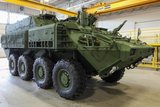
![Canada’s C$2 billion ACSV deal reinforces new defence industrial strategy as allies align]()
Canada’s C$2 billion ACSV deal reinforces new defence industrial strategy as allies align
General Dynamics Land Systems-Canada is the country’s first strategic partner under the Defence Industrial Strategy’s Strategic Partnership Framework, an effort to provide companies with confidence to invest and boost the defence labour force.
-
![New UK armed forces minister frames High North defence as vital to “homeland security”]()
New UK armed forces minister frames High North defence as vital to “homeland security”
The UK’s Minister for the Armed Forces Louise Sandher-Jones made her first appearance in the role before the House of Commons Defence Committee this week to highlight efforts to improve capability in the High North.
-
![Canada seeks to strengthen industrial ties with the US on classified programmes]()
Canada seeks to strengthen industrial ties with the US on classified programmes
Ottawa explores expanding defence-industrial cooperation with Washington into sensitive programmes, an approach that could reshape NORAD modernisation, strengthen North American supply chains and create new opportunities for defence contractors.