


MDA completes ‘first of a kind’ ICBM missile defence test
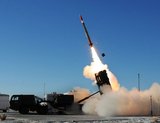
FTM-44 was arranged to show how Missile Defense Agency can use the USN Aegis Combat System (equipped with the Standard Missile-3 Block IIA) to intercept intercontinental threats


The Missile Defense Agency (MDA) announced on 17 November that it has conducted a successful interception test of a Northrop Grumman-built Intercontinental Ballistic Missile (ICBM) target, using a Standard Missile-3 (SM-3) Block IIA ballistic missile defense interceptor.
Raytheon co-developed the interceptor with Japanese company Mitsubishi Heavy Industries.
Involved as the Aegis Combat System Engineering Agent, engineers from Lockheed Martin updated the Aegis weapon system to integrate SM-3 IIA on the Arleigh Burke-class destroyer USS John Finn. The Aegis system was adapted to target, identify, and intercept the ICBM threat.
As mandated by the US Congress, the test, called Flight Test Maritime-44 (FTM-44) was arranged to demonstrate that the MDA can use the USN Aegis Combat System equipped with the SM-3 IIA to intercept intercontinental threats.
‘This vital test demonstrated the latest Aegis Baseline 9.C2.0 capability against an ICBM class threat and introduces the ability to provide layered Homeland Defense with Aegis,’ Lockheed Martin announced in a statement.
Jim Sheridan, VP and general manager, added that the successful intercept ‘confirms we have inherent capability against long-range ballistic missile threats that can be deployed to all our Aegis Baseline 9 ships and Aegis Ashore sites – at any moment’.
Aegis Baseline 9.C2.0 is built from the Common Source Library and can rapidly integrate new capabilities, including solutions for SPY-1 and SPY-7 radars.
FTM-44 was the first test of its kind, according to Bryan Rosselli, VP of strategic missile defence at Raytheon Missiles & Defense. It ‘shows that our nation has a viable option for a new layer of defence against long-range threats’, he added.
Raytheon Intelligence & Space sensors were also part of FTM-44, which was conducted from the Reagan Test Site in Kwajalein Atoll. Sensors detected and tracked the target and relayed the data to decision makers, in a demonstration of space-based early warning.
Besides its involvement with the ICBM target, Northrop Grumman is prime contractor on the Intermediate-Range Ballistic Missile (IRBM) target, which is air-launched from a C-17 aircraft to provide the MDA with flexibility in mission engagement scenarios.
To date, the company has supported three ICBM target launches and five IRBM target launches with 18 more on contract for future test missions with the MDA.

You may also like
More from Defence Notes
-
![From systems integrator to multi-domain solutions provider (video)]()
From systems integrator to multi-domain solutions provider (video)
Philipp von Brandenstein, Head of Corporate Communications at Rheinmetall, explains how Eurosatory 2026 marked a new stage in the company's evolution.
-
![US Pentagon pushes for major reform of defence acquisition system]()
US Pentagon pushes for major reform of defence acquisition system
The US Department of Defense has requested new contracting authorities from Congress, using the Army's MV-75 Cheyenne programme to demonstrate how competition, digital engineering and closer industry collaboration could accelerate acquisitions.
-
![US speeds up B61-13 nuclear bomb production as programme moves further ahead of schedule]()
US speeds up B61-13 nuclear bomb production as programme moves further ahead of schedule
The US government plans to accelerate production even further after achieving key B61-13 milestones months ahead of schedule, as the programme advances amid growing US-China strategic competition.
-
![Canada’s C$2 billion ACSV deal reinforces new defence industrial strategy as allies align]()
Canada’s C$2 billion ACSV deal reinforces new defence industrial strategy as allies align
General Dynamics Land Systems-Canada is the country’s first strategic partner under the Defence Industrial Strategy’s Strategic Partnership Framework, an effort to provide companies with confidence to invest and boost the defence labour force.
-
![New UK armed forces minister frames High North defence as vital to “homeland security”]()
New UK armed forces minister frames High North defence as vital to “homeland security”
The UK’s Minister for the Armed Forces Louise Sandher-Jones made her first appearance in the role before the House of Commons Defence Committee this week to highlight efforts to improve capability in the High North.
-
![Canada seeks to strengthen industrial ties with the US on classified programmes]()
Canada seeks to strengthen industrial ties with the US on classified programmes
Ottawa explores expanding defence-industrial cooperation with Washington into sensitive programmes, an approach that could reshape NORAD modernisation, strengthen North American supply chains and create new opportunities for defence contractors.








