Israel uses new F-35 stealth fighters in combat


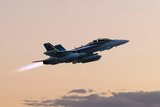
The Israeli military has used its newly acquired F-35 stealth fighters in combat, making it the world’s first to do so, an Israeli Air Force (IAF) Commander said on 22 May.
Using the plane’s Hebrew name, Major General Amikam Norkin said at a conference in central Israel: ‘The Adir aircraft are already operational and flying combat missions. In fact, we have performed the first operational F-35 strike in the world.’
Norkin said in remarks quoted by the air force’s website: ‘We attacked twice in the Middle East using the F-35 – we are the first in the world to do so.’
Israel has carried out a number of strikes in Syria against what it describes as Iranian targets as well as on what it says are advanced arms deliveries to Hezbollah.
The country has agreed to buy 50 of the American high-tech stealth bombers, which will help it maintain military superiority in the turbulent Middle East, particularly regarding anti-aircraft missile systems in Syria.
In December 2017, the IAF announced that the nine F-35 jets in its possession at the time were operational.
Norkin was speaking at an event marking the IAF’s 70th anniversary in Herzliya, north of Tel Aviv, attended by senior air force officials from over 20 countries, the military said.
Israel has pledged to prevent its main enemy Iran from entrenching itself militarily in neighbouring Syria, where Tehran is backing President Bashar al-Assad’s regime.
Earlier in May 2018, Israel launched a large-scale attack on what it said were Iranian targets in Syria, raising fears of a major confrontation.
Those strikes followed a barrage of rockets that Israel said was fired toward its forces in the occupied Golan Heights by Iran from Syria.
In his comments on 22 May, Norkin also made reference to an Israeli strike on missiles Iran had allegedly transported to Syria, without providing a timeframe.
Norkin said: ‘Over the past weeks, we understood that Iran was transporting long-range missiles and rockets to Syria, among which are ‘Uragan’ missile launchers which we attacked, just north of Damascus.’
He then went on to describe the series of events on 9 and 10 May.
Norkin said: ‘The Iranians fired 32 rockets. We intercepted four of them and the rest fell outside Israeli territory. Afterwards, we attacked dozens of Iranian targets in Syria.’
He noted that over 100 ground-to-air missiles were fired at Israeli planes during the attack.
The strikes left at least 27 pro-regime fighters dead, including 11 Iranians, according to the Britain-based Syrian Observatory for Human Rights.
Israel has been blamed for a series of other recent strikes inside Syria that have killed Iranians, though it has not acknowledged them.
As a result, Israel had been preparing itself for weeks for possible Iranian retaliation.

You may also like

More from Defence Notes
-
![From systems integrator to multi-domain solutions provider (video)]()
From systems integrator to multi-domain solutions provider (video)
Philipp von Brandenstein, Head of Corporate Communications at Rheinmetall, explains how Eurosatory 2026 marked a new stage in the company's evolution.
-
![US Pentagon pushes for major reform of defence acquisition system]()
US Pentagon pushes for major reform of defence acquisition system
The US Department of Defense has requested new contracting authorities from Congress, using the Army's MV-75 Cheyenne programme to demonstrate how competition, digital engineering and closer industry collaboration could accelerate acquisitions.
-
![US speeds up B61-13 nuclear bomb production as programme moves further ahead of schedule]()
US speeds up B61-13 nuclear bomb production as programme moves further ahead of schedule
The US government plans to accelerate production even further after achieving key B61-13 milestones months ahead of schedule, as the programme advances amid growing US-China strategic competition.
-
![Canada’s C$2 billion ACSV deal reinforces new defence industrial strategy as allies align]()
Canada’s C$2 billion ACSV deal reinforces new defence industrial strategy as allies align
General Dynamics Land Systems-Canada is the country’s first strategic partner under the Defence Industrial Strategy’s Strategic Partnership Framework, an effort to provide companies with confidence to invest and boost the defence labour force.
-
![New UK armed forces minister frames High North defence as vital to “homeland security”]()
New UK armed forces minister frames High North defence as vital to “homeland security”
The UK’s Minister for the Armed Forces Louise Sandher-Jones made her first appearance in the role before the House of Commons Defence Committee this week to highlight efforts to improve capability in the High North.
-
![Canada seeks to strengthen industrial ties with the US on classified programmes]()
Canada seeks to strengthen industrial ties with the US on classified programmes
Ottawa explores expanding defence-industrial cooperation with Washington into sensitive programmes, an approach that could reshape NORAD modernisation, strengthen North American supply chains and create new opportunities for defence contractors.