Israel tests Arrow-3
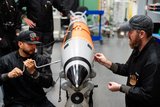
The Arrow-3 programme is co-funded by the US government. (Photo: Israeli MoD)
The latest Arrow-3 trial, conducted in central Israel, saw two interceptors fired to destroy an inbound target.


The Israeli MoD on 18 January announced another successful test of the Arrow-3 anti-ballistic missile system and its interceptors.
The trial, led by Israel Aerospace Industries (IAI), was conducted in a test field in a central area of the country.
According to a press release from MoD, Arrow’s radar arrays detected an incoming target and shared this data with the Shooting Management Centre, which analysed the information and prepared a full interception plan.
Two Arrow-3 interceptors were fired at the target and destroyed it.
Arrow-3 is designed to intercept ballistic missiles outside the atmosphere and is part of the multi-layered Israeli missile defence system, which also includes David’s Sling, Arrow-2 and Iron Dome.
Shephard Defense Insight notes that Arrow-3 was developed by IAI and Boeing and is the upgraded variant of the Arrow-2. Co-funded by the US government, it started in 2008 and went into service with the Israeli Air Force in January 2017.
It features a two-stage interceptor with an exo-atmospheric kill vehicle that is capable of destroying incoming ballistic missiles and intercontinental ballistic missiles.
Related Equipment in Defence Insight



More from Defence Notes
-
![US speeds up B61-13 nuclear bomb production as programme moves further ahead of schedule]()
US speeds up B61-13 nuclear bomb production as programme moves further ahead of schedule
The US government plans to accelerate production even further after achieving key B61-13 milestones months ahead of schedule, as the programme advances amid growing US-China strategic competition.
-
![New UK armed forces minister frames High North defence as vital to “homeland security”]()
New UK armed forces minister frames High North defence as vital to “homeland security”
The UK’s Minister for the Armed Forces Louise Sandher-Jones made her first appearance in the role before the House of Commons Defence Committee this week to highlight efforts to improve capability in the High North.
-
![Canada seeks to strengthen industrial ties with the US on classified programmes]()
Canada seeks to strengthen industrial ties with the US on classified programmes
Ottawa explores expanding defence-industrial cooperation with Washington into sensitive programmes, an approach that could reshape NORAD modernisation, strengthen North American supply chains and create new opportunities for defence contractors.