Insight: Retaliation bites but Iran risks catastrophic consequences from the air


Ensure you don’t miss any of our analysis and exclusive news – sign up for our Premium News service now
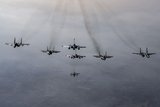
After days of uncertainty as to how Iran would retaliate to the killing of Maj Gen Qasem Soleimani, reports on 8 January that the country had fired Fateh-110 short-range ballistic missiles targeting Ain-al-Asad airbase and Erbil in Iraq have given a first firm indication of how Tehran wants to confront the US and escalate violence in the Middle East.
That chosen path could now see air defence networks and fighter fleets forced into more regular action, with an assessment
Our news & analysis is now part of Defence Insight®
A Basic-level or higher Defence Insight subscription is now required to view this content.

You may also like
More from Defence Notes
-
![Global Ordnance and Sparkz disclose plans for 500,000 US-made UAV batteries a year]()
Global Ordnance and Sparkz disclose plans for 500,000 US-made UAV batteries a year
The companies have outlined plans for US$25 million manufacturing lines and initial deliveries in 2027 as Washington tightens restrictions on Chinese UAV components.
-
![Patria OPTIME and ILIAS: Orchestrating operational readiness across every domain]()
Patria OPTIME and ILIAS: Orchestrating operational readiness across every domain
Patria OPTIME is a sustainment concept that integrates MRO and lifecycle services into one solution, powered by the ILIAS digital defence platform
-
![US military seeks common controllers for drones and robotic systems]()
US military seeks common controllers for drones and robotic systems
US Air Force, Army, Marine Corps and Special Operations Command initiatives signal demand for interoperable uncrewed systems control, creating opportunities for suppliers of hardware, software and integration services.
-
![“Start planning much earlier”: delivering defence support in an era of disruption]()
“Start planning much earlier”: delivering defence support in an era of disruption
In Conversation… The geopolitical landscape is increasingly uncertain, with the UK and its allies confronting the most unpredictable international environment for decades. To adapt, defence readiness must begin long before assets reach the front line, forging a resilient support enterprise that can thrive in a time of ongoing disruption, argue the partners of Team ORION.
-
![“Communicating at mission speed”: why data security is essential for operational success]()
“Communicating at mission speed”: why data security is essential for operational success
In conversation… Everfox’s Chairman and Chief Executive Officer Dave Wajsgras and Managing Director, International, Colin McKinty discuss the critical importance of information security in defence, minimising insider risk and the company’s international growth strategy with Shephard’s Andrew White.
-
![“Engage with the operational problem”: how software innovation can boost UK defence]()
“Engage with the operational problem”: how software innovation can boost UK defence
In Conversation… Shephard’s Andrew White talks to Zafer Şen, CEO and co-founder of OBSS, about the future of command-and-control software in the age of artificial intelligence, and his company’s ambitions in the UK defence market.