


From systems integrator to multi-domain solutions provider (video)
Philipp von Brandenstein, Head of Corporate Communications at Rheinmetall, explains how Eurosatory 2026 marked a new stage in the company's evolution.


QinetiQ used the I/ITSEC conference in Orlando, Florida, to announce that it has been awarded an 18-month extension to its Distributed Synthetic Air Land Training (DSALT) contract by the UK MoD.
The initial four year contract was awarded in May 2009 and allows RAF pilots to train alongside British Army forward air controllers and artillery personnel prior to deployment to the front line.
The contract covers the provision and running of a training facility at RAF Waddington.
‘We’re really showing the breadth of our capability,’ Nigel Best, director of global business development at QinetiQ UK, told Shephard of the company’s
Our news & analysis is now part of Defence Insight®
A Basic-level or higher Defence Insight subscription is now required to view this content.


Philipp von Brandenstein, Head of Corporate Communications at Rheinmetall, explains how Eurosatory 2026 marked a new stage in the company's evolution.

The US Department of Defense has requested new contracting authorities from Congress, using the Army's MV-75 Cheyenne programme to demonstrate how competition, digital engineering and closer industry collaboration could accelerate acquisitions.

The US government plans to accelerate production even further after achieving key B61-13 milestones months ahead of schedule, as the programme advances amid growing US-China strategic competition.
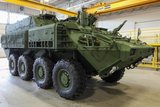
General Dynamics Land Systems-Canada is the country’s first strategic partner under the Defence Industrial Strategy’s Strategic Partnership Framework, an effort to provide companies with confidence to invest and boost the defence labour force.

The UK’s Minister for the Armed Forces Louise Sandher-Jones made her first appearance in the role before the House of Commons Defence Committee this week to highlight efforts to improve capability in the High North.

Ottawa explores expanding defence-industrial cooperation with Washington into sensitive programmes, an approach that could reshape NORAD modernisation, strengthen North American supply chains and create new opportunities for defence contractors.

Connect with us on socials


