Dramatic changes in store for ADF after Defence Strategic Review is released
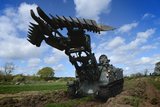
Land 400 Phase 3, an effort to obtain new IFVs for the Australian Army, has come a cropper under the Defence Strategic Review. (Photo: ADF)
There are no major surprises in the Defence Strategic Review, but it presages a major change of direction for Australia’s military and approach to defence.


On 24 April, a day before ANZAC Day, the Australian government released a public version of its long-awaited Defence Strategic Review.
The 110-page document marks a sea change in Australia’s view of its regional security environment and recommends major alterations in direction for the Australian Defence Force (ADF). It is being described as the furthest-reaching overhaul in Australian defence since WWII.
It stated the ADF must possess the capacity to: defend the country and immediate region; deter through denial any hostile attempt to project power through Australia’s northern approaches; protect regional and global economic connections; contribute to the collective security
Our news & analysis is now part of Defence Insight®
A Basic-level or higher Defence Insight subscription is now required to view this content.



More from Defence Notes
-
![UK urged to prioritise sea, air and space over heavy armour]()
UK urged to prioritise sea, air and space over heavy armour
A report from the Council on Geostrategy argues the UK should move away from a traditional balanced force and shift investment to naval, air and space capabilities, backed by a larger fleet of attack submarines and deeper AUKUS integration.
-
![Orchestrating operational readiness across every defence domain]()
Orchestrating operational readiness across every defence domain
Are all systems ready for the next mission? Have upgrades been applied? Are all assets aligned to deploy together, on time and fully prepared? In modern defence operations, readiness is no longer measured platform by platform. It is measured by how well people, assets, data and decisions move together — across land, sea and air.
-
![Global tensions drive defence supply chain scrutiny]()
Global tensions drive defence supply chain scrutiny
Governments worldwide are scrambling to decouple defence supply chains from dependency upon strategic rivals, but countries could struggle to do it all themselves.
-
![How deepening AI usage can boost efficiency and maximise effects for forces]()
How deepening AI usage can boost efficiency and maximise effects for forces
Saab has outlined how it is using artificial intelligence to make training more like electronic gaming, while the UK’s Power Size Technologies is applying the same technology to better evaluate and design vehicle capability, moving AI-enabled innovation further upstream from the frontline.
-
![From systems integrator to multi-domain solutions provider (video)]()
From systems integrator to multi-domain solutions provider (video)
Philipp von Brandenstein, Head of Corporate Communications at Rheinmetall, explains how Eurosatory 2026 marked a new stage in the company's evolution.