DoD calls on National Guard for help in health crisis


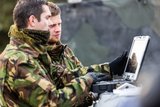
The Department of Defense (DoD) has activated 2,050 National Guard personnel in 27 states to help support efforts to stem the spread of coronavirus in the US.
National Guard units are playing differing roles across each of the 27 states. In New York State, they are delivering food and ensuring the maintenance of supply chains, whilst the Tennessee Air National Guard used C-17 Globemasters on 16 March to transport 500,000 COVID-19 testing kits from Italy to Memphis.
Additionally, 500 troops are collecting “drive-thru” samples in Florida and Guard Liaison Officers are advising and assisting the New Orleans Office of Homeland Security in Louisiana.
Air Force General Joseph Lengyel said that the National Guard remains ‘flexible and committed for whatever mission we may be called to do’.
As of 19 March, six National Guard personnel had tested positive for the virus.
Related Equipment in Defence Insight


More from Defence Notes
-
![UK urged to prioritise sea, air and space over heavy armour]()
UK urged to prioritise sea, air and space over heavy armour
A report from the Council on Geostrategy argues the UK should move away from a traditional balanced force and shift investment to naval, air and space capabilities, backed by a larger fleet of attack submarines and deeper AUKUS integration.
-
![Thales: deployment speed to determine winners in ‘production versus production’ era]()
Thales: deployment speed to determine winners in ‘production versus production’ era
At its technology summit in London, attended by Shephard, Thales UK examined the importance of speed to delivery, the growing focus on cross-domain capabilities and how procurement reform could be crucial for future battlefield advantage.
-
![Orchestrating operational readiness across every defence domain]()
Orchestrating operational readiness across every defence domain
Are all systems ready for the next mission? Have upgrades been applied? Are all assets aligned to deploy together, on time and fully prepared? In modern defence operations, readiness is no longer measured platform by platform. It is measured by how well people, assets, data and decisions move together — across land, sea and air.
-
![Global tensions drive defence supply chain scrutiny]()
Global tensions drive defence supply chain scrutiny
Governments worldwide are scrambling to decouple defence supply chains from dependency upon strategic rivals, but countries could struggle to do it all themselves.
-
![How deepening AI usage can boost efficiency and maximise effects for forces]()
How deepening AI usage can boost efficiency and maximise effects for forces
Saab has outlined how it is using artificial intelligence to make training more like electronic gaming, while the UK’s Power Size Technologies is applying the same technology to better evaluate and design vehicle capability, moving AI-enabled innovation further upstream from the frontline.
-
![From systems integrator to multi-domain solutions provider (video)]()
From systems integrator to multi-domain solutions provider (video)
Philipp von Brandenstein, Head of Corporate Communications at Rheinmetall, explains how Eurosatory 2026 marked a new stage in the company's evolution.