


From systems integrator to multi-domain solutions provider (video)
Philipp von Brandenstein, Head of Corporate Communications at Rheinmetall, explains how Eurosatory 2026 marked a new stage in the company's evolution.


Cobham has delivered four converted Hawker-Beechcraft B350ER King Air special mission aircraft to Ascent Flight Training Limited for the United Kingdom Military Flying Training System (UKMFTS). The delivery occurred 9 June at a ceremony at Cobham Aviation Services’ facility adjacent to Bournemouth International Airport, UK.
“These aircraft, and the services provided by Ascent and Cobham, offer the Royal Navy a huge leap in its capability to conduct primary flight training of aircrew,” said Des Taylor, general manager of Cobham Aviation Services.
Royal Navy and Ascent personnel will use these four aircraft to train RN Observers to navigate and operate their aircraft tactically, prior to commencing operational flying training on Lynx, Merlin and Sea King helicopters. Fitted out with twin Student training consoles and twin Instructor consoles, the aircraft will be equipped with a 360-degree Telephonic RDR1700A under-belly radar and full navigation and communications suites. The onboard training system will be managed by CAE’s Tactical Mission Trainer software system, which will include the Blue Ridge synthetic radar embedded within. Collectively, this new system will enable numerous opportunities to “download” training from later stages in the training pipeline. The Royal Australian Air Force and Canadian Armed Forces use a similar system for training their tactical navigators.
Cobham Aviation Services at Bournemouth International Airport received the approximately £20 million contract from Ascent during mid-2009 to convert these aircraft for the role, and to provide daily in-service support for an initial period of five years at RNAS Culdrose, commencing 1st July 2011. These King Air aircraft replace the now retired Jetstream T2 aircraft, and will be operated by 750 Naval Air Squadron at Culdrose.
Source: Cobham Aviation Services


Philipp von Brandenstein, Head of Corporate Communications at Rheinmetall, explains how Eurosatory 2026 marked a new stage in the company's evolution.

The US Department of Defense has requested new contracting authorities from Congress, using the Army's MV-75 Cheyenne programme to demonstrate how competition, digital engineering and closer industry collaboration could accelerate acquisitions.

The US government plans to accelerate production even further after achieving key B61-13 milestones months ahead of schedule, as the programme advances amid growing US-China strategic competition.
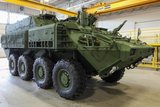
General Dynamics Land Systems-Canada is the country’s first strategic partner under the Defence Industrial Strategy’s Strategic Partnership Framework, an effort to provide companies with confidence to invest and boost the defence labour force.

The UK’s Minister for the Armed Forces Louise Sandher-Jones made her first appearance in the role before the House of Commons Defence Committee this week to highlight efforts to improve capability in the High North.
Ottawa explores expanding defence-industrial cooperation with Washington into sensitive programmes, an approach that could reshape NORAD modernisation, strengthen North American supply chains and create new opportunities for defence contractors.

Connect with us on socials


