


“Capital follows confidence” as defence courts private money
Outside investment and the direction in which venture money flows may reveal what defence will buy years before formal programmes begin.


Cobham has delivered four converted Hawker-Beechcraft B350ER King Air special mission aircraft to Ascent Flight Training Limited for the United Kingdom Military Flying Training System (UKMFTS). The delivery occurred 9 June at a ceremony at Cobham Aviation Services’ facility adjacent to Bournemouth International Airport, UK.
“These aircraft, and the services provided by Ascent and Cobham, offer the Royal Navy a huge leap in its capability to conduct primary flight training of aircrew,” said Des Taylor, general manager of Cobham Aviation Services.
Royal Navy and Ascent personnel will use these four aircraft to train RN Observers to navigate and operate their aircraft tactically, prior to commencing operational flying training on Lynx, Merlin and Sea King helicopters. Fitted out with twin Student training consoles and twin Instructor consoles, the aircraft will be equipped with a 360-degree Telephonic RDR1700A under-belly radar and full navigation and communications suites. The onboard training system will be managed by CAE’s Tactical Mission Trainer software system, which will include the Blue Ridge synthetic radar embedded within. Collectively, this new system will enable numerous opportunities to “download” training from later stages in the training pipeline. The Royal Australian Air Force and Canadian Armed Forces use a similar system for training their tactical navigators.
Cobham Aviation Services at Bournemouth International Airport received the approximately £20 million contract from Ascent during mid-2009 to convert these aircraft for the role, and to provide daily in-service support for an initial period of five years at RNAS Culdrose, commencing 1st July 2011. These King Air aircraft replace the now retired Jetstream T2 aircraft, and will be operated by 750 Naval Air Squadron at Culdrose.
Source: Cobham Aviation Services

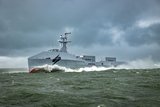
Outside investment and the direction in which venture money flows may reveal what defence will buy years before formal programmes begin.

The Department of National Defence expects initial contracts to deliver thousands of uncrewed systems, but has yet to establish the quantities, capability mix or deadline behind Ottawa’s promised tenfold expansion.
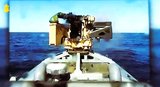
The company told Shephard that Ukraine is operating modified Protector weapon stations originally supplied for armoured vehicles, with human operators authorising engagements from hundreds of kilometres away.

A report from the Council on Geostrategy argues the UK should move away from a traditional balanced force and shift investment to naval, air and space capabilities, backed by a larger fleet of attack submarines and deeper AUKUS integration.

At its technology summit in London, attended by Shephard, Thales UK examined the importance of speed to delivery, the growing focus on cross-domain capabilities and how procurement reform could be crucial for future battlefield advantage.
Are all systems ready for the next mission? Have upgrades been applied? Are all assets aligned to deploy together, on time and fully prepared? In modern defence operations, readiness is no longer measured platform by platform. It is measured by how well people, assets, data and decisions move together — across land, sea and air.

Connect with us on socials


