USAF conducts first F-16 Block 70 flight of L3Harris’ Viper Shield
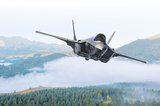
L3Harris has plans for Viper Shield to integrate across all F-16 Blocks, to improve its EW capabilities. (Photo: Lockheed Martin)
The Viper Shield electronic warfare suite was tested by the US Air Force’s 412th Test Wing at Edwards Air Force Base, with L3Harris aiming for deliveries of the system to international customers by late 2025.


L3Harris has announced the successful first flight of its Viper Shield in a F-16 Block 70, flown at the US Air Force’s 412th Test Wing at Edwards Air Force Base in California.
The flight reportedly included risk reduction tests and other avionic subsystems compatibility, as well as testing interoperability with the APG-83 active electronically scanned array (AESA) radar.
The Viper Shield is a digital electronic warfare (EW) suite being produced for international customers acquiring the Block 70/72 F-16 aircraft. According to L3Harris, it provides advanced EW capabilities to F-16 fighter fleets.
Related Articles
L3Harris’ Viper Shield for F-16s completes safety tests
L3Harris develops Viper Shield EW system and makes strides on DiSCO development
Flight testing will continue throughout 2025, with systems to be delivered by “late 2025”, according to Ed Zoiss, president, space and airborne systems, L3Harris. The company previously announced that the internal system was under production in September 2024.
Maj. Anthony Pipe, F-16 Experimental Test Pilot, US Air Force added: “This flight launches the latest capability enhancement for the F-16 and our warfighters. The Viper Shield system combined with a Block 70 airframe creates a leap in capability compared to the traditional Block 50 Viper I grew up flying. The EW advancements this system brings will ensure pilots flying these aircraft continue to make it home.”
Shephard previously learned that the Viper Shield system could be configured as an external pod, which is in development. While there are no customers for the pod yet, L3Haris reportedly see it as an alternative to a system upgrade on F-16 Block 20 to 50/52 aircraft.
Related Equipment in Defence Insight



More from Air Warfare
-
![Spain air focus: Mature UAV market rewards early supplier engagement]()
Spain air focus: Mature UAV market rewards early supplier engagement
Spain accounts for 5% of European military UAV spending, broadly in line with its share of the continent’s wider defence market. What sets the country apart, however, is how much of that spending has already been committed, reflecting Spain's earlier adoption of the capability.
-
![New US Army UH-60M Black Hawk order bridges uncertain path to MV-75 transition]()
New US Army UH-60M Black Hawk order bridges uncertain path to MV-75 transition
The US$234 million award for 16 Sikorsky UH-60Ms preserves near-term production, but funding uncertainty and an undefinitised contract leave the US Army’s long-term Black Hawk requirements unresolved.
-
![V-22 Osprey safety upgrade moves towards wider fleet installation under $35.5 million deal]()
V-22 Osprey safety upgrade moves towards wider fleet installation under $35.5 million deal
Bell Boeing will supply 73 additional ODSSHI kits as NAVAIR prepares to introduce predictive drive-system monitoring across US and Japanese V-22 fleets.
-
![AFA 2026: US Air Force examines uncrewed cargo aircraft for contested logistics]()
AFA 2026: US Air Force examines uncrewed cargo aircraft for contested logistics
The US Air Force is evaluating demonstrators for uncrewed cargo missions as it considers logistics requirements across the Pacific and other contested environments.
-
![Germany air focus: Europe’s leading near-term air market targets domestic industry]()
Germany air focus: Europe’s leading near-term air market targets domestic industry
Between 2026 and 2032, almost a quarter of EU aircraft spending is expected to come from Germany. While crewed programmes seek modernisation and replacement, uncrewed opportunities look to introduce entirely new capabilities, with both highlighting sovereignty and domestic production.