USAF awards contract to design SIGINT sensor
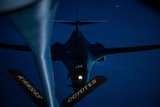
Northrop Grumman will design an open standards-based signals intelligence (SIGINT) sensor prototype for USAF. (Imagine: Northrop Grumman)
Northrop Grumman Corporation was awarded a contract to design a platform-agnostic sensor.


Northrop Grumman Corp. will design a prototype sensor, including airborne and ground components, with an innovative, open standards-based hardware and software architecture that can be scaled and configured to fly on multiple types of manned and unmanned Air Force aircraft.
This contract is part of the Air Force’s Global High-altitude Open-system Sensor Technology (GHOST) program and will provide USAF with a sensor for high-altitude intelligence, surveillance, and reconnaissance platforms.
The new sensor will also support rapid system enhancement, testing, accreditation and integration at the speed of relevance long into the future as the dynamic battlespace changes.
Vice president and general manager of Northrop Grumman, Ben Davies, said: 'our platform-agnostic GHOST sensor is a next-generation intelligence data collection and exploitation system'.

More from Air Warfare
-
![Eastern European helicopter modernisation could open doors for Western manufacturers]()
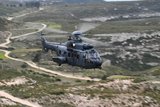
Eastern European helicopter modernisation could open doors for Western manufacturers
With some Eastern European countries already upgrading their helicopter fleets to incorporate Western technology, the region presents potential future opportunities for defence companies.
-
![UK E-7 Wedgetail delay down to a “technology issue”, as MoD grapples with slipping timelines]()
UK E-7 Wedgetail delay down to a “technology issue”, as MoD grapples with slipping timelines
The first of three E-7 Wedgetail aircraft, originally ordered in 2019, is now expected to be delivered to the RAF this year after multiple “difficulties”.
-
![Forecast $21.9 billion light attack and trainer opportunities up for grabs as Leonardo lines up M-346]()
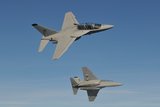
Forecast $21.9 billion light attack and trainer opportunities up for grabs as Leonardo lines up M-346
The M-346 stands as a potential contender for various countries facing impending capability gaps due to ageing trainer aircraft, while it could also be selected as a cost-effective light fighter aircraft.
-
![US Air Force seeks capabilities to improve C3 for aircraft fleet and warfighters]()
US Air Force seeks capabilities to improve C3 for aircraft fleet and warfighters
The USAF published RFIs for enhancing its C3 capabilities after losing, in Operation Epic Fury, four aircraft in non-confrontational, unclear situations that could have been related to command, control and communication failures.