US pulls some V-22 Ospreys from service with clutch-related issues
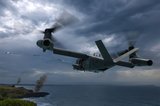
Despite maintenance issues, USMC, USN and US Air Force Special Operations Command squadrons will continue training and operations with the V-22 Osprey. (Photo: US DoD)
The US Marine Corps was aware of the technical issue with the V-22 tiltrotor but decided against grounding the aircraft and instructed pilots to deal with the incidents in-flight instead as injuries were not suffered.


The Pentagon is temporarily taking an undisclosed number of Bell V-22 Ospreys out of service across the USMC, the USN and the USAF, a defence official told reporters on 4 February during a briefing.
The problem appears to be the input quill assembly that connects the rotorcraft’s engines to the drive system, which needs replacing after a certain number of flight hours to ensure safe operations.
‘This recommendation is based on a progressive increase in hard clutch engagements and ongoing engineering analysis,’ the official was quoted saying by Breaking Defense.
US DoD, however, does not want to specify the
Our news & analysis is now part of Defence Insight®
A Basic-level or higher Defence Insight subscription is now required to view this content.


More from Air Warfare
-
![July drone digest: Sovereign production takes centre stage at Farnborough]()
July drone digest: Sovereign production takes centre stage at Farnborough
Farnborough International Airshow (FIA) 2026 revealed the growing scale of the UK’s uncrewed ambitions, with companies showcasing new CCA, autonomous wingmen and surveillance drones, while sovereign production emerged as a key factor for multiple programmes.
-
![July air forces review: Farnborough steals the headlines as programmes develop]()
July air forces review: Farnborough steals the headlines as programmes develop
The biannual Farnborough International Airshow 2026 was the backdrop in July for scores of deals, partnerships and announcements, including developments in the multinational next-generation Global Combat Air Programme and the UK’s $486 million trainer aircraft requirement.
-
![FIA 2026: Bell highlights MOSA-driven growth path for MV-75 Cheyenne]()
FIA 2026: Bell highlights MOSA-driven growth path for MV-75 Cheyenne
Bell Flight’s modular open-systems approach for the US Army’s MV-75 Cheyenne could open doors for international allies and suppliers once locked out by closed rotorcraft architectures.
-
![Maximise survivability with advanced electronic warfare (video)]()
Maximise survivability with advanced electronic warfare (video)
BAE Systems’ all-digital EW delivers 360-degree threat awareness in contested environments, boosts survivability, and cuts lifecycle costs.
-
![US Air Force seeks avionics upgrades for ageing T-38 Talon as T-7A Red Hawk delays persist]()
US Air Force seeks avionics upgrades for ageing T-38 Talon as T-7A Red Hawk delays persist
The USAF is looking for commercial avionics solutions to improve the T-38 Talon’s reliability, readiness and flight safety as continued T-7A Red Hawk delays increase the likelihood that the legacy trainer will remain in service longer than planned.
-
![British Army’s Project Corvus selection highlights new era of drone sovereignty]()
British Army’s Project Corvus selection highlights new era of drone sovereignty
The UK’s choice of the Tekever AR5 for Project Corvus reflects a wider shift in military drone procurement towards solutions that centre on sovereignty and domestic production, moving away from overseas reliance.