US Navy Super Hornet LITENING pod makes first flight
Northrop Grumman's LITENING pod has been designed for autonomous target tracking and surveillance (Photo: Northrop Grumman)
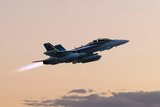
Northrop Grumman’s LITENING pod has successfully flown on a US Navy F/A-18 Super Hornet for the first time.


Northrop Grumman’s LITENING targeting pod equipped on a USN F/A-18 Super Hornet combat jet has made its first flight.
‘During the flight, pilots executed manoeuvres and operations representative of combat missions, including ground moving target tracking, air-to-air tracking and target designation,’ Northrop Grumman stated in a 7 September news release. ‘The pilots also engaged the eye-safe training laser mode that allows the pod to be used for realistic training with combat controllers on the ground.’
LITENING was selected by the USN in early 2022 with capabilities including autonomous target tracking, surveillance.
The pod features daylight and FLIR sensors with colour video in high definition, plug-and-play data links and a modular design, according to Northrop Grumman company literature.
The manufacturer also noted that more than 900 LITENING systems have been delivered to the USMC, USAF, Air National Guard and international customers.
Related Equipment in Defence Insight

More from Air Warfare
-
![Attack drones versus CUAS – the future of warfare or just another trend?]()
Attack drones versus CUAS – the future of warfare or just another trend?
Demand signals for counter-drone technology are strong and the market is becoming crowded, but is this really the beginning of a new phase of warfare or will commentators be talking about something else 10 years from now?
-
![The 2020s: a decade of UAV spending growth]()
The 2020s: a decade of UAV spending growth
Total annual drone spending has increased nearly sixfold since the start of the decade, from $2.9 billion in 2020 to $16.3 billion in 2028, with Europe leading the rise.
-
![July drone digest: Sovereign production takes centre stage at Farnborough]()
July drone digest: Sovereign production takes centre stage at Farnborough
Farnborough International Airshow (FIA) 2026 revealed the growing scale of the UK’s uncrewed ambitions, with companies showcasing new CCA, autonomous wingmen and surveillance drones, while sovereign production emerged as a key factor for multiple programmes.
-
![July air forces review: Farnborough steals the headlines as programmes develop]()
July air forces review: Farnborough steals the headlines as programmes develop
The biannual Farnborough International Airshow 2026 was the backdrop in July for scores of deals, partnerships and announcements, including developments in the multinational next-generation Global Combat Air Programme and the UK’s $486 million trainer aircraft requirement.