Europe will “struggle” to fill capability gaps left by US-Ukraine aid pause
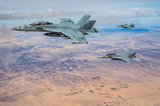
Training and spares support on European donated F-16s have been approved by the US to Ukraine as recently as December 2024. (Photo: Dutch Ministry of Defence)
Europe’s capacity to fill the capability gaps created by the US pause on military aid to Ukraine is uncertain, according to analysts, but European defence industry leaders have stressed their readiness to meet demand.


Europe will “struggle” to cover US-equipment capabilities in the short term, following the US’s suspension of military aid to Ukraine, defence analysts have said.
US-made hardware such as Patriot air defence missiles, National Advanced Surface-to-Air Missile Systems (NASAMs), M142 HIMARS rocket launchers, M2 Bradley infantry fighting vehicles have all been donated to Ukraine in various military aid packages.
Spares and maintenance support for these platforms, as well as training for older Block F-16 aircraft have also been committed, in support of the European-donated aircraft.
Dr Jacob Parakilas, research leader for defence, security and justice at research organisation RAND emphasised the
Our news & analysis is now part of Defence Insight®
A Basic-level or higher Defence Insight subscription is now required to view this content.

More from Air Warfare
-
![Extending mission readiness: where XR adds real value in pilot, crew and maintenance training]()
Extending mission readiness: where XR adds real value in pilot, crew and maintenance training
Extended reality (XR) is becoming increasingly relevant in military aviation training, adding a flexible layer to an integrated ecosystem spanning the pilot, crew, and maintenance domains.
-
![US military tests AI-powered CUAS turret against drone swarms]()
US military tests AI-powered CUAS turret against drone swarms
As the US continues to invest heavily in counter-drone systems, demand for low-cost, mobile and autonomous technologies is on the rise, with Edda designed to align with these emerging requirements.
-
![August crewed air review: KC-390 momentum builds as demand in the tanker market grows]()
August crewed air review: KC-390 momentum builds as demand in the tanker market grows
The KC-390 is building a growing international operator base, but competition in the transport and tanker market is increasingly likely to depend on interoperability, commonality and the strength of supporting ecosystems. Meanwhile, Boeing’s KC-46 and Airbus’s A330 also gained ground in August.
-
![Iran war exposes the limits of US military mass]()
Iran war exposes the limits of US military mass
As the Straits of Hormuz continue to witness military action of various types, what does this mean for combat air and air defence planners in the region and beyond?