US Army picks RapidEdge as mission system for Air Launched Effects
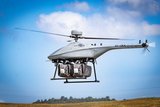
The US Army has chosen its mission system supplier for Air Launched Effects that will be fired from its future helicopters. (Image: Lockheed Martin)
The open architecture RapidEdge mission system provides central functionality for Air Launched Effects from US Army Future Vertical Lift platforms.


Collins Aerospace announced on 25 July that the US Army has chosen its RapidEdge solution as the mission system for the next phase of the Air Launched Effects (ALE) initiative within the Future Vertical Lift (FVL) programme.
ALE is a family of air-launched guided weapons and attritable UAVs capable of mounting explosive and non-kinetic effects warheads or carrying out ISR missions for the US Army.
The open-architecture RapidEdge provides ‘central functionality’ for ALE including radios for communication, solutions for handling multiple levels of classified data and mission computing, Collins Aerospace noted in a statement.
As an open system, RapidEdge can absorb third-party capabilities to give the US Army flexibility and ‘avoid vendor lock’, according to the company.
It added that the mission system ‘also enables multiple, autonomous, ALEs to work together toward a common goal by leveraging individual payloads to make a greater impact on dynamic and complex operational environments’.
In November 2021, Collins Aerospace successfully demonstrated RapidEdge to support FVL.
Related Programmes in Defence Insight
Launched Effects - Medium Range (LE-MR) [US]
Future Long Range Assault Aircraft (FLRAA) (MV-75 Cheyenne II) [USA]

More from Air Warfare
-
![Rafale AI trials highlight shift towards operational fighter testbeds]()
Rafale AI trials highlight shift towards operational fighter testbeds
Dassault’s latest Rafale trials join Gripen E and F-16 testing as developers explore how artificial intelligence could support and control combat aircraft.
-
![AFA 2026: US Air Force examines uncrewed cargo aircraft for contested logistics]()
AFA 2026: US Air Force examines uncrewed cargo aircraft for contested logistics
The US Air Force is evaluating demonstrators for uncrewed cargo missions as it considers logistics requirements across the Pacific and other contested environments.
-
![Germany air focus: Europe’s leading near-term air market targets domestic industry]()
Germany air focus: Europe’s leading near-term air market targets domestic industry
Between 2026 and 2032, almost a quarter of EU aircraft spending is expected to come from Germany. While crewed programmes seek modernisation and replacement, uncrewed opportunities look to introduce entirely new capabilities, with both highlighting sovereignty and domestic production.
-
![Europe risks losing control of CUAS production capacity as manufacturers look abroad]()
Europe risks losing control of CUAS production capacity as manufacturers look abroad
European counter-drone developers are securing early orders in the Middle East while slow domestic acquisition processes threaten to redirect production capacity, expertise and investment away from Europe.