US approves Hellenic F-16 fleet upgrades
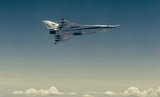
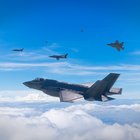
Hellenic Air Force (HAF) F-16V upgrades will deliver a significant increase in capability for the HAF combat aircraft fleet at a fraction of the cost of procuring new aircraft. (Image: Lockheed Martin)
An FMS has been approved by the US State Department for F-16 support and equipment to be delivered to Greece.


The US State Department has approved a possible sale of F-16 sustainment materiel, services and related equipment to Greece.
The contract has an estimated value of $270 million.
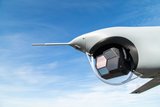
The contract includes engineering, technical, and logistics support services for a range F-16 support programmes including aircraft structural integrity, aircrew training device and reconnaissance pods support.
Software support has also been contracted for information distribution systems, joint mission planning software and other classified and unclassified aircraft software.
This sale will provide agile logistics support to Greece’s F-16 programme, encompassing aspects of aircrew training and aircraft maintenance.
The ability to provide this level of support to the F-16 programme will increase its interoperability with NATO forces and enhance its ability to provide security of its borders.
Greece views this modernisation programme as crucial to maintaining national security, an issue which has been emphasised by the tense situation in July-August 2020 with Turkey, during which both nations put their fleets on high alert.
Relations between the states have since normalised and the leaders of the states pledged to maintain a dialogue during a NATO summit in June 2021.
The principal contractors for this proposed sale are L3/Harris, Lockheed Martin, Collins Aerospace, Northrop Grumman, Raytheon and Atec.
Related Equipment in Defence Insight

You may also like
More from Air Warfare
-
![Northrop–Hermeus deal underscores push to pair startup speed with defence know-how]()
Northrop–Hermeus deal underscores push to pair startup speed with defence know-how
Northrop Grumman plans mission systems testing following its Hermeus agreement, highlighting how established defence contractors are partnering with newer companies to accelerate development and bring autonomous capabilities to military customers.
-
![Advances in AI sensing technology reshape how UAV operators interpret battlefield data]()
Advances in AI sensing technology reshape how UAV operators interpret battlefield data
AI-powered sensing technologies are advancing battlefield intelligence capabilities, with companies including Sightline Intelligence and Arkeus developing smaller, more sophisticated systems to help military UAV operators process data and identify threats.
-
![Propulsion for the autonomous era]()
Propulsion for the autonomous era
For decades, advanced military propulsion has centred on enabling ever-more capable fighters and bombers – delivering more thrust, more range, greater power, and thermal management, plus longer service lives. Those requirements remain essential. However, the rise of autonomous systems, advanced effectors, and autonomous collaborative platforms is redefining what that propulsion must deliver.
-
![Czech Republic UAV focus: moderate market value masks limited supplier opportunities]()
Czech Republic UAV focus: moderate market value masks limited supplier opportunities
The Czech Republic’s shift towards smaller uncrewed aerial vehicles has reshaped its procurement priorities, leaving nearly three-quarters of the market unawarded. Yet with this value concentrated in just two programmes, the highest-value opportunities could contain a high level of risk.
-
![RAF Protector fleet grows as UK maritime surveillance role takes shape]()
RAF Protector fleet grows as UK maritime surveillance role takes shape
The RAF’s expanding Protector RG1 fleet could play a growing role in UK maritime surveillance following its first domestic operational sorties, with further aircraft deliveries scheduled through 2027.
-
![Leonardo details Proteus’s path to autonomous anti-submarine missions for the Royal Navy]()
Leonardo details Proteus’s path to autonomous anti-submarine missions for the Royal Navy
Leonardo’s integration of Shield AI’s Hivemind software could enable its Proteus uncrewed helicopter to conduct independent anti-submarine warfare missions, supporting the Royal Navy’s plans for a future hybrid air wing.