Focus on economy over capability highlights the cost imperative for CCA success
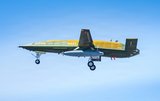
The XQ-58 Valkyrie is a CCA that has been flying since 2019. Shephard believes it is one of the cheapest MALE CCAs. (Photo: Kratos)
Striking the right balance between cost and capability is likely to become more crucial in the increasingly competitive collaborative combat aircraft market. Shephard’s special CCA market report examines where the opportunities lie for suppliers.


The growing push to acquire collaborative combat aircraft (CCA) is fundamentally rooted in cost-effective calculations, according to Shephard Defence Insight’s Special Report: Collaborative Combat Aircraft (CCA).
The US Air Force’s (USAF) Increment 1 CCA effort is based on the concept that mass is necessary to compete effectively against an adversary in symmetrical warfare. Due to budgetary constraints, though, this mass must be economical to obtain and operate.
That is why USAF secretary Frank Kendall stated that CCA drones should cost around US$25 million per airframe. Likewise, the 13 MQ-28A Ghost Bats Australia acquired between 2013 and 2022 from Boeing Defense Australia had an
Our news & analysis is now part of Defence Insight®
A Basic-level or higher Defence Insight subscription is now required to view this content.

More from Air Warfare
-
![India’s military integration drive faces interoperability hurdles]()
India’s military integration drive faces interoperability hurdles
Senior military leaders have highlighted the need for interoperable systems, common data standards and closer cooperation between India's armed services.
-
![UK A400M Saudi deployment highlights airlifter’s role as Airbus pursues upgrades]()
UK A400M Saudi deployment highlights airlifter’s role as Airbus pursues upgrades
Airbus is developing new capabilities for its A400M transport aircraft as European countries consider future airlift requirements and the UK plans to deploy the aircraft to Saudi Arabia.
-
![The new generation of defence companies emerging from the US UAV boom]()
The new generation of defence companies emerging from the US UAV boom
As the Pentagon accelerates procurement of low-cost, lethal UAVs through its Drone Dominance Program, emerging suppliers will need to demonstrate manufacturing capacity, supply chain resilience and reliability.
-
![US Coast Guard faces key procurement decisions after C-130J and MQ-9B orders]()
US Coast Guard faces key procurement decisions after C-130J and MQ-9B orders
The service is updating several parts of its aviation fleet including fixed-wing and rotary-wing aircraft and procuring uncrewed aircraft to boost its maritime surveillance.